January 14, 2026
Introduction
If you’ve been told you have golfer’s elbow, chances are you were also told to rest, ice your elbow, stretch your forearm, or maybe even consider a corticosteroid injection. And while those approaches may calm symptoms temporarily, many people I see at my Toronto Chiropractic clinic are frustrated because the pain keeps coming back.
That’s because golfer’s elbow is rarely just an elbow problem!
As a Toronto chiropractor specializing in NeuroStructural Corrective Care, I help patients understand why persistent elbow pain often stems from dysfunction higher up in the spine and nervous system—especially in the neck, upper back, and shoulder complex. When those areas aren’t working properly, the elbow is often the place that finally “complains.”
Let’s break down what golfer’s elbow really is—and how corrective chiropractic care addresses the root cause, not just the symptoms.
The Problem: Golfer’s Elbow Is More Than Inner Elbow Pain
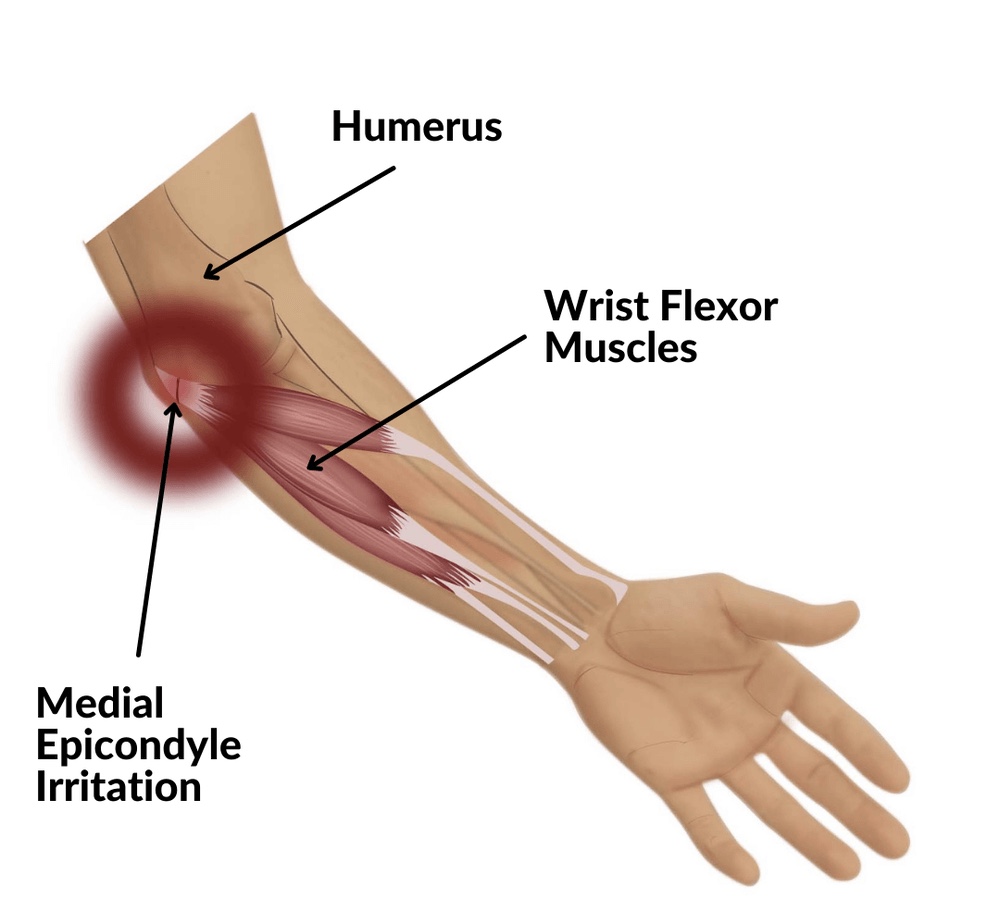
Golfer’s elbow, clinically known as medial epicondylitis, refers to irritation of the tendons that attach to the inner part of the elbow. These tendons connect to the muscles responsible for wrist flexion and gripping.
According to the Canadian Chiropractic Association, golfer’s elbow is commonly associated with repetitive strain, poor biomechanics, and overload of the forearm muscles—not just golf swings, but also desk work, lifting, and tool use (Canadian Chiropractic Association).
Common symptoms include:
What’s often missed is why those forearm muscles are being overloaded in the first place.
Why Treating the Elbow Alone Often Fails
Many conventional treatments focus locally:
While these may help short term, research published in PubMed suggests that chronic tendinopathies are often influenced by neuromuscular control and proximal joint dysfunction, not just local tissue irritation (PubMed – Tendinopathy and motor control).
In simple terms:
If the spine, shoulder, or nervous system isn’t coordinating movement properly, the elbow compensates—and eventually breaks down.
Expert Insight: Dr. Mateusz’s Perspective
At Dr. Mateusz Krekora Chiropractic Clinic in downtown Toronto, I often see golfer’s elbow in patients who:
What they have in common is not just elbow pain—but poor spinal mechanics and nervous system stress.
The nervous system controls muscle tone, coordination, and load distribution. When spinal joints—particularly in the cervical (neck) and upper thoracic spine—aren’t moving correctly, nerve signaling to the shoulder, arm, and forearm can become inefficient.
The Ontario Chiropractic Association recognizes that spinal joint dysfunction can influence extremity conditions through altered nerve function and biomechanics (Ontario Chiropractic Association).
This is why simply “fixing the elbow” often isn’t enough.
How Spinal Dysfunction Contributes to Golfer’s Elbow
1. Cervical Spine and Nerve Supply
The nerves that control the forearm muscles originate in the lower cervical spine. When spinal alignment or motion is compromised, those nerves may not fire optimally (Muscle inactivaton and dysfunction ensues).
Research in peer-reviewed literature suggests that altered cervical spine mechanics can affect upper limb muscle activation and load tolerance (PubMed – Cervical spine and upper limb function).
2. Shoulder and Scapular Instability
If the shoulder blade doesn’t move correctly, the forearm muscles are forced to work harder to stabilize the arm during gripping or swinging motions. Over time, this overload shows up at the elbow.
3. Desk Posture and Forward Head Carriage
Prolonged sitting and screen use—common for Toronto professionals—can lead to forward head posture. Poor ergonomics at the desk may produce more stress at the elbow as well due to armrest positioning. This shifts mechanical stress downstream and increases strain on the elbows that accumulates every work day.
The Government of Canada highlights posture-related musculoskeletal strain as a contributor to repetitive stress injuries (Government of Canada – Workplace ergonomics).
How NeuroStructural Corrective Chiropractic Care Solves It
Corrective chiropractic care is different from symptom-based care. Instead of chasing pain, we focus on long-term spinal correction and nervous system optimization.
Step 1: Comprehensive NeuroStructural Assessment
At my clinic, we assess:
This allows us to identify why the elbow is under stress, not just where it hurts.
Step 2: Corrective Chiropractic Adjustments
Gentle, precise chiropractic adjustments help:
Evidence supports chiropractic care as a conservative option for managing musculoskeletal conditions involving joint and nerve dysfunction (Canadian Chiropractic Association).
Step 3: Postural and Movement Re-education
Corrective care includes guidance on:
This is essential for preventing recurrence.
Why This Approach Leads to More Lasting Results
While research into the full neurophysiological mechanisms is ongoing, current evidence suggests that addressing proximal stability and nervous system function improves outcomes in chronic extremity conditions (PubMed – Kinetic chain dysfunction).
By restoring balance upstream:
That’s how patients move from “managing” golfer’s elbow to actually resolving it.
Local Tips for Recovery and Maintenance in Toronto
Small daily habits make a big difference when combined with corrective care.
Conclusion
Golfer’s elbow isn’t just an elbow issue—it’s often a sign that something higher up in the spine and nervous system isn’t functioning optimally.
At Dr. Mateusz Krekora Chiropractic Clinic, our NeuroStructural Corrective Process focuses on fixing the root cause, helping you feel strong, move freely, and get back to doing what you love—without recurring pain.
If you’re tired of short-term fixes and want a more complete solution, I invite you to take the next step.
👉 Book Your Free Case Review today and start feeling 25 again.

.png)
