January 19, 2026
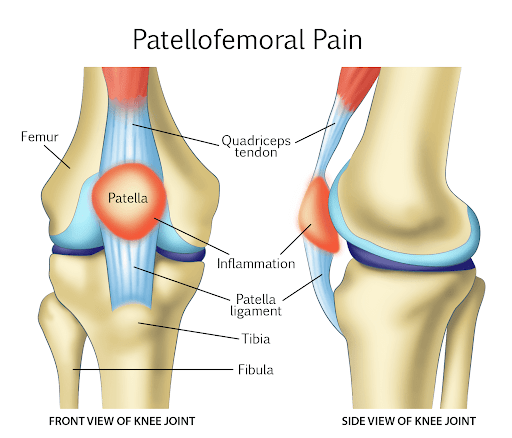
Front-of-the-knee pain can be deceptively frustrating. You rest. You ice. You stretch. Maybe you wear a brace. And yet the discomfort returns—especially with stairs, squats, running, or long periods of sitting.
This pattern is common with Patellofemoral Pain Syndrome (PFPS). At my Downtown Toronto clinic, I regularly see professionals from Bay Street, recreational runners along the Don Valley Trail, and active gym-goers who have been told their knee pain is “just overuse.” In reality, patellofemoral syndrome is rarely just a knee problem.
As a Toronto chiropractor specializing in NeuroStructural Corrective Care, my approach focuses on identifying why the kneecap is irritated and correcting the underlying movement and nerve-control issues that allow the problem to persist.
⸻
What Is Patellofemoral Pain Syndrome?
Patellofemoral Pain Syndrome refers to pain arising from the interaction between the patella (kneecap) and the femur (thigh bone). It is often described as a dull ache or sharp discomfort around or behind the kneecap.
Common triggers include:
• Walking up or down stairs
• Squatting or lunging
• Running or jumping
• Sitting for long periods with the knees bent (“theatre sign”)
Current research describes PFPS as a multifactorial condition, meaning it develops from a combination of biomechanical, muscular, and neuromuscular factors rather than a single structural injury (PubMed).
⸻
Why Patellofemoral Pain Can Be So Stubborn
One of the most frustrating aspects of patellofemoral syndrome is how easily it becomes chronic. Many people experience short-term relief, only to have pain return when activity resumes.
The Knee Is a “Middle Joint”
The knee sits between two major control centers:
• The hip
• The low back and pelvis
If movement or muscle control is impaired above or below the knee, abnormal forces are transmitted directly through the patellofemoral joint. Research consistently shows that proximal factors—particularly at the hip and trunk—play a key role in persistent PFPS (PubMed).
When treatment focuses only on the knee, the underlying drivers of stress remain unchanged.
⸻
The Role of Hip and Glute Dysfunction
Healthy knee mechanics depend heavily on hip stability and glute activation.
The gluteal muscles help:
• Stabilize the pelvis during single-leg activity
• Control rotation of the femur
• Absorb and distribute load during walking, running, and squatting
When the glutes are weak or poorly activated, the femur tends to rotate inward and move excessively toward the midline. This changes how the kneecap contacts the femur, increasing joint stress.
Multiple studies have shown that people with patellofemoral pain often demonstrate reduced glute strength or delayed glute activation, contributing to faulty knee mechanics (PubMed).
⸻
Quadriceps Overuse: A Common Compensation Pattern
When the hips fail to provide stability, the body compensates—most commonly through the quadriceps muscles.
This leads to:
• Quadriceps dominance
• Increased pulling forces on the kneecap
• Greater compression in the patellofemoral joint
Over time, this compensation perpetuates irritation of the kneecap. Even well-intentioned quad-focused exercises can reinforce the problem if hip and spine control are not addressed first.
⸻
How the Low Back and Spine Influence Knee Function
An often-overlooked contributor to PFPS is low back and pelvic joint dysfunction.
The lumbar spine houses nerves that control:
• Glute muscle activation
• Hip stability
• Lower-limb coordination
If spinal joints are restricted or not moving optimally, nerve signaling to the hips and legs can be altered. The Canadian Chiropractic Association notes that spinal joint dysfunction can affect neuromuscular control and movement efficiency (Canadian Chiropractic Association).
At my Toronto clinic, it’s common for patients with knee pain to also present with:
• Reduced lumbar spine mobility
• Pelvic imbalance
• Long-standing postural stress from prolonged sitting
These factors quietly influence how the knee is loaded during everyday movement.
⸻
How Corrective Chiropractic Addresses the Root Cause
Improving Low Back and Pelvic Joint Function
Corrective chiropractic care focuses on restoring proper motion to the spinal and pelvic joints. When these joints move better, nerve communication improves, allowing muscles to activate and coordinate more effectively.
According to the Ontario Chiropractic Association, chiropractic care aims to optimize joint function and neuromuscular coordination to support healthy movement patterns (Ontario Chiropractic Association).
For patients with patellofemoral pain, improved spinal mechanics can:
• Enhance glute activation
• Improve pelvic control
• Reduce abnormal forces transmitted to the knee
⸻
Enhancing Glute Activation and Hip Control
Once spinal joint function improves, corrective strategies emphasize restoring glute strength, timing, and endurance.
Improved glute activation helps:
• Control femur rotation during movement
• Reduce inward knee collapse
• Allow the kneecap to track more centrally
Clinical evidence increasingly supports hip-focused interventions as a key component in reducing patellofemoral pain and improving long-term outcomes (PubMed).
⸻
Reducing Quadriceps Overuse and Improving Patellar Tracking
When the hips and spine begin doing their job, the quadriceps no longer need to overcompensate.
This balance:
• Reduces excessive pulling on the patella
• Decreases compressive stress in the patellofemoral joint
• Supports smoother, more efficient knee motion
Rather than forcing the knee to adapt, the entire lower-body system becomes more coordinated—allowing the kneecap to track properly with everyday activities and exercise.
⸻
Why Symptom-Only Approaches Often Fall Short
Bracing, taping, ice, and rest may reduce pain temporarily, but they often fail to address:
• Spinal joint dysfunction
• Poor hip and glute control
• Faulty movement patterns
Without correcting these underlying issues, many people experience recurring flare-ups—especially when returning to running, gym training, or long workdays in Toronto’s desk-based environments.
⸻
Local Toronto Lifestyle Factors to Consider
Urban living places unique demands on the body:
• Prolonged sitting and commuting
• Walking on hard concrete surfaces
• Recreational running and cycling
At Dr. Mateusz Krekora Chiropractic Clinic, these daily stresses are considered when developing a corrective care plan—because lasting improvement depends on how your body functions outside the clinic, not just during treatment.
⸻
Conclusion
Patellofemoral Pain Syndrome doesn’t have to be a recurring cycle of rest and relapse.
When Chiropractic care addresses:
• Low back and pelvic joint function
• Glute activation and hip control
• Quadriceps overuse and compensation
…the knee finally has the support it needs to move pain-free.
At Dr. Mateusz Krekora Chiropractic Clinic, our NeuroStructural Corrective Process is designed to fix the root cause of knee pain—not just manage symptoms—so you can move with confidence again.
👉 Book Your Free Case Review today and start feeling strong and mobile again.
⸻
This article is for informational purposes only and should not be taken as medical advice. Please consult a licensed chiropractor before starting any treatment.

.png)
