July 17, 2026
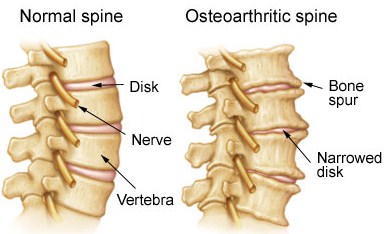
If you’ve been struggling with persistent mid-back pain, you’ve probably heard the same explanation more than once:
“It’s arthritis.”
Many people visit my Toronto chiropractic clinic after finally having an MRI of their thoracic spine. The scan often reveals degenerative changes or arthritis in the joints of the mid-back. While the diagnosis seems to explain everything, they’re often left wondering why the pain hasn’t improved despite physiotherapy, medications, massage, injections, or months of rehabilitation.
Here’s what surprises many patients:
The presence of arthritis on an MRI doesn’t necessarily mean it’s the primary reason you’re in pain.
In fact, many people have arthritic changes without experiencing any symptoms at all. At the same time, stiff spinal joints, restricted movement, poor posture, and altered mechanics can place excessive stress on those joints—making even mild arthritis feel much worse than it needs to.
At Toronto Top Chiropractor, our NeuroStructural Corrective Process focuses on restoring normal spinal motion and improving how your thoracic spine functions, helping many patients achieve lasting relief even when arthritis is present.
Why Mid-Back Pain Is Often Blamed on Arthritis
Thoracic arthritis refers to wear-and-tear changes affecting the small facet joints between the vertebrae.
These changes become increasingly common with age.
After an MRI reveals arthritis, many patients naturally assume:
Unfortunately, this mindset often leads people down a path of treatments aimed only at reducing symptoms rather than improving the underlying mechanics of the spine.
I frequently meet patients who have:
Yet they still struggle to sit comfortably, twist their body, play golf, exercise, or simply enjoy daily life without pain.
Arthritis Doesn’t Mean the Joint Should Stop Moving
One of the biggest misconceptions is that arthritic joints should simply be left alone.
In reality, healthy joints are designed to move.
When a spinal segment becomes stiff or restricted, several things happen:
This creates a vicious cycle:
Pain → Less movement → More stiffness → More stress on the joint → More pain.
The goal isn’t to “fix” arthritis.
The goal is to restore the healthiest movement possible despite the arthritis.
The Real Question Isn’t “Do You Have Arthritis?”
Instead, I ask patients:
“How well is your spine functioning?”
Two people can have nearly identical MRI findings.
One has no pain.
The other can barely sit at a desk for 30 minutes.
Why?
Because imaging tells us about structure—not necessarily function.
Your nervous system, joint mobility, posture, muscular balance, breathing mechanics, and spinal alignment all influence how much stress is placed on your thoracic spine every day.
When these factors improve, symptoms often improve as well.
How Corrective Chiropractic Helps
Corrective chiropractic care is different from simply trying to make the pain disappear temporarily.
Our goal is to improve the way the spine moves.
Using precise chiropractic adjustments, we work to restore normal motion to restricted thoracic joints.
When appropriate, we combine adjustments with:
Rather than chasing symptoms, we’re improving the mechanical environment of the spine.
Better movement often means:
Even when arthritis remains visible on imaging, many patients report significantly less pain because the joints are functioning better.
Motion Is Medicine
One of the most important concepts I teach patients is this:
Motion nourishes joints.
Every time a healthy joint moves:
Conversely, avoiding movement often accelerates stiffness and functional decline.
This doesn’t mean forcing painful movement.
It means restoring controlled, comfortable motion through appropriate chiropractic care and individualized corrective exercises.
Why Corrective Exercises Matter
An adjustment restores movement.
Corrective exercises help your body keep it.
Without strengthening the muscles that support the spine, many patients gradually fall back into the same movement patterns that contributed to their problem in the first place.
That’s why every corrective care plan at our clinic includes exercises designed specifically for the patient’s posture and movement patterns.
These exercises may improve:
Together with chiropractic adjustments, they help create longer-lasting results.
You Are More Than Your MRI
One of the most reassuring conversations I have with patients is explaining that imaging findings do not define their future.
Yes, arthritis is real.
Yes, joints change with age.
But many people continue living active, healthy lives with arthritic changes because their bodies continue to move well.
Instead of asking:
“How bad is my MRI?”
Ask:
“How well is my spine functioning?”
That question often leads to a much more hopeful answer.
Take the Next Step Toward Lasting Relief
If you’ve been told your mid-back pain is simply “arthritis,” don’t assume you’ve reached the end of the road.
Restoring proper spinal movement, improving posture, and strengthening the muscles that support your thoracic spine may significantly reduce pain and improve your quality of life—even if arthritis is present.
At Toronto Top Chiropractor, our NeuroStructural Corrective Process focuses on identifying the underlying movement dysfunctions contributing to your symptoms, not just treating where it hurts.
If you’re ready to understand what’s really driving your mid-back pain, we’d be happy to help.
Book your free 20-minute case review today and start feeling like you’re 25 again.
https://torontocorrectivechiropractic.janeapp.com/#/staff_member/5
This article is for informational purposes only and should not be taken as medical advice. Arthritis visible on imaging may or may not be the primary source of symptoms. A thorough examination by a licensed chiropractor or other qualified healthcare professional is necessary to determine the most appropriate treatment for your individual condition.

.png)
