October 14, 2026
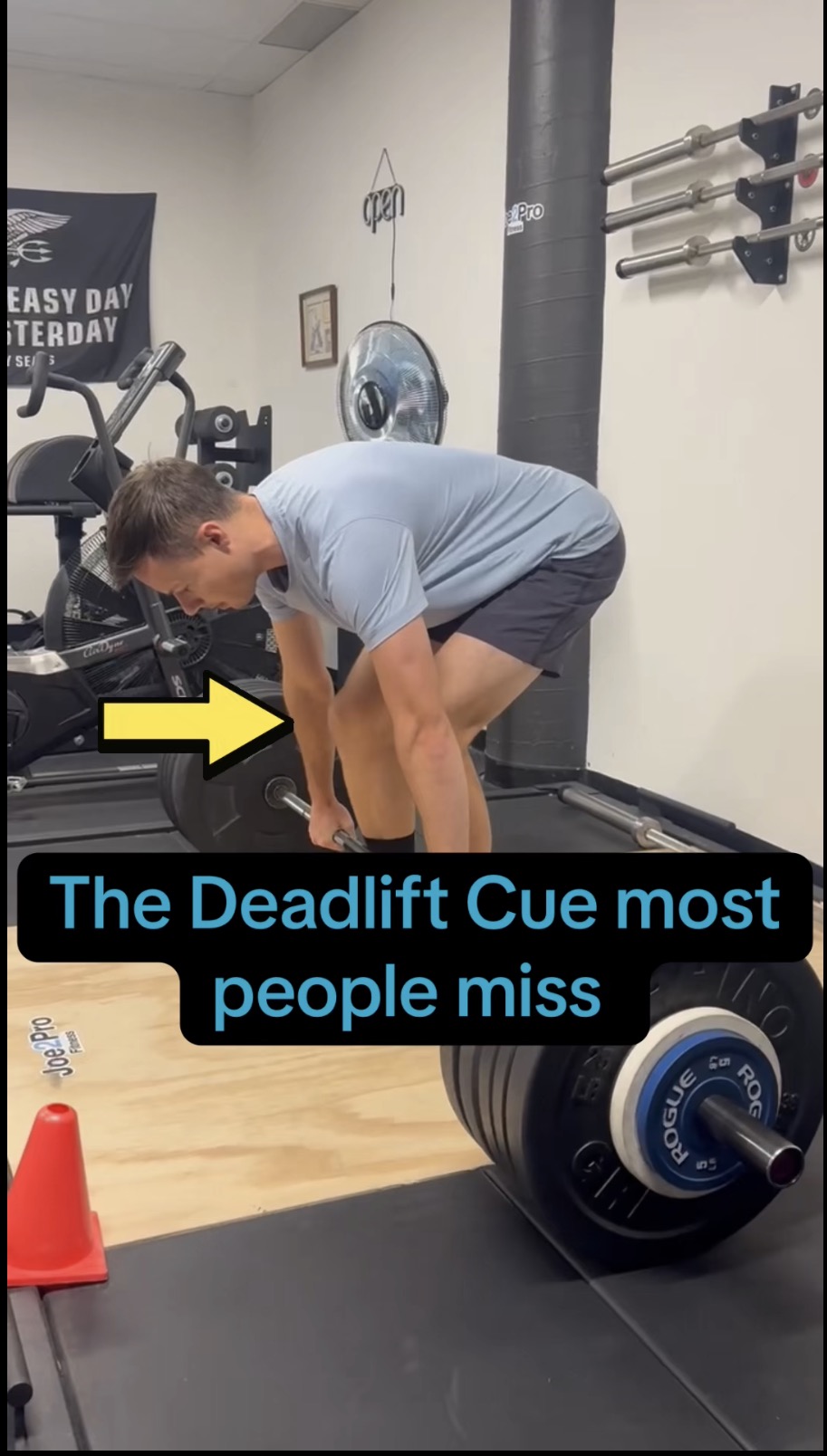
For years, I wasn’t particularly confident with deadlifts.
Like many people, I had heard enough stories about back injuries from lifting weights that I was always conscious of my lower back when performing the exercise. I also felt like my form wasn’t quite right.
Was I using my legs enough?
Was my back in the right position?
Was I actually engaging my lats?
Was I supposed to be pulling the weight up—or pushing the floor away?
These questions made deadlifting feel more complicated than it needed to be.
That changed when I started working with a personal trainer and learned a handful of simple cues that completely changed how I approached the exercise.
These cues helped me understand what I should actually be doing during different portions of the lift. More importantly, they made the deadlift feel much more natural.
As a Toronto chiropractor who also enjoys strength training, these are cues I now use myself and incorporate when appropriate when helping patients improve their lifting technique.
They aren’t magic phrases, and no cue can guarantee that someone won’t get injured. But the right cue can help you understand the movement and distribute the demands of the exercise more effectively.
Why I Like the Deadlift
The deadlift is one of the most effective compound exercises for developing strength throughout the posterior chain and lower body.
Research examining deadlift biomechanics has demonstrated substantial demands on the hip extensors, while studies of muscle activity show involvement from the glutes, hamstrings, quadriceps, erector spinae and other muscles. (PubMed)
That’s one of the reasons I like it.
You’re not simply training one muscle.
You’re coordinating your feet, legs, hips, trunk, upper back and grip to move a load from the floor to a standing position.
But the deadlift is also a technical movement.
If you approach it as simply “pick up the weight,” it’s easy to become overly focused on pulling with your arms and lower back.
Instead, I like to think about the deadlift as a coordinated effort between pushing, pulling, bracing and extending.
Here are five cues that helped me understand that concept.
Deadlift Cue #1: “Split the Floor”
This is one of my favourite cues for helping people understand how to engage their glutes.
Imagine that you’re standing on a sheet of paper and trying to rip the floor apart with your feet.
You’re not literally moving your feet.
Instead, you’re creating an outward rotational intention through your hips.
This can help encourage engagement of the muscles around the hips, including the glutes, while maintaining control of the knees and feet.
The cue is particularly useful because many people think about the deadlift as a purely vertical movement:
“Pull the bar up.”
I prefer to give the body a more complete instruction:
“Create tension through your feet, engage your hips and drive from the floor.”
The deadlift requires coordination of the hip and knee extensors, and research shows that conventional deadlifting can create substantial hip-extensor demands. (PubMed)
One important clarification: “split the floor” doesn’t mean aggressively pushing your knees outward as far as possible.
Think tension, not excessive movement.
Your knees should remain aligned with the movement rather than being forced into an exaggerated position.
Deadlift Cue #2: “Break the Bar”
This cue sounds strange until you try it.
When you’re holding the bar at the bottom of a deadlift, imagine that you’re trying to bend the bar in half by rotating your hands outward.
Obviously, you aren’t actually going to bend a loaded barbell.
The purpose is to create tension through the upper body.
This cue can help people engage their latissimus dorsi—the large muscles running along the sides of the upper back—and create a more connected feeling between the arms, torso and bar.
Think:
“Break the bar.”
Then:
“Pull the bar toward you.”
You’re not actually rowing the bar into your body. You’re creating upper-body tension so the bar stays close and your torso feels more stable.
Keeping the bar close to the body is also consistent with guidance from the Ontario Chiropractic Association, which recommends maintaining a neutral lower back and keeping the bar close during deadlifts. (OCA)
This cue was a game changer for me because I stopped thinking of my arms as two separate hooks attached to the bar.
Instead, I started feeling like my entire upper body was connected to the lift.
Deadlift Cue #3: “Push the Floor Away”
This may be the single biggest mental change I made to my deadlift.
Most beginners think:
“Pull the bar up.”
But that naturally makes you think about your arms.
Instead, think:
“Push the floor away.”
Imagine that you’re performing a leg press against the ground.
Your feet are pushing into the floor while your legs and hips drive your body upward.
This is important because the deadlift isn’t simply an upper-body pulling exercise.
The lower body plays a major role.
Research comparing deadlifts with other compound exercises demonstrates significant hip-extensor demands during the deadlift, while conventional deadlifts have also been shown to involve the quadriceps and gluteus maximus. (PubMed)
The Canadian Chiropractic Association similarly recommends using the strength of your legs and arms rather than relying on your back when lifting a load. (Canadian Chiropractic Association (CCA))
So when you’re at the bottom of the deadlift, don’t just think about pulling the bar toward your body.
Think:
Feet into the floor.
Legs drive.
Hips extend.
Bar stays close.
That mental shift can make a huge difference.
Deadlift Cue #4: “Slide the Bar Up Your Shins”
Now we get into one of the classic deadlift cues.
As you begin the lift, think about sliding the bar up your shins.
This doesn’t mean deliberately scraping the bar against your legs.
It means keeping the bar close to your body as it travels upward.
Why does this matter?
Because when the bar drifts forward, the movement can become mechanically more demanding for your trunk.
Keeping the load close helps maintain a more efficient relationship between your body and the bar.
This is also consistent with Canadian chiropractic lifting guidance, which recommends standing close to a load and keeping it close to the body during lifting. (Canadian Chiropractic Association (CCA))
For me, the visual cue is simple:
The bar travels up, not forward.
Don’t chase the bar.
Keep yourself connected to it.
Deadlift Cue #5: “Below the Knee? Stand Up.”
Here’s another cue I find useful once the bar has passed the most demanding starting position.
Once the bar gets around or just below the knee, think:
“Stand up.”
Don’t overcomplicate the second half of the movement.
You’re not trying to curl the bar toward yourself.
You’re not trying to lean backward.
You’re simply continuing to extend the hips and knees until you’re standing tall.
This helps eliminate a common mistake where people try to finish the deadlift by aggressively pulling their shoulders backward.
Instead:
Get the bar moving.
Keep it close.
Push the floor away.
Then stand tall.
The Ontario Chiropractic Association similarly describes the deadlift as a hip-hinge movement and emphasizes maintaining a neutral spine while keeping the bar close. (OCA)
Putting the Cues Together
The individual cues become much more useful when you combine them.
Before the lift:
“Break the bar.”
Create tension through your upper body and engage your lats.
As you initiate:
“Split the floor.”
Create tension through the feet and hips.
Then:
“Push the floor away.”
Drive through the legs rather than thinking exclusively about pulling with your arms.
As the bar rises:
“Slide it up the shins.”
Keep the bar close.
Once the bar passes the knee:
“Stand up.”
Extend the hips and knees and finish tall.
Suddenly, the deadlift becomes much easier to visualize.
You’re not simply “lifting a heavy bar.”
You’re executing a sequence:
Create tension → push → keep the bar close → extend → stand tall.
What About Your Back During a Deadlift?
This is where I think people sometimes become unnecessarily afraid of the exercise.
A deadlift does place significant demands on the muscles and structures around your spine. That’s precisely why appropriate technique, load selection and progression matter.
At the same time, the existence of spinal loading doesn’t automatically mean that deadlifting is inherently unsafe.
Your body is designed to adapt to appropriately dosed physical demands.
Research examining spinal alignment during deadlifting demonstrates that the spine does move and adjust during the exercise rather than remaining completely static. (PubMed)
For beginners, however, I don’t recommend trying to figure all of this out with a maximal barbell.
Learn the movement.
Practice with manageable resistance.
Develop strength.
Then gradually increase the challenge.
And if you’re experiencing pain, don’t simply try to “push through” it because someone told you that deadlifts are supposed to be uncomfortable.
That’s when an individualized assessment can be useful.
When Should a Beginner Get Help?
If you’re brand new to strength training, you don’t need to figure everything out by yourself.
A qualified personal trainer with experience teaching strength movements can be extremely helpful for learning the technical aspects of the deadlift.
As a chiropractor with strength-training experience, I also assess how the spine, hips, pelvis and surrounding musculature are contributing to someone’s movement.
At Dr. Mateusz Krekora Chiropractic Clinic, I may look at factors such as mobility, strength, movement control and left-to-right differences when someone is struggling with a particular movement.
The goal isn’t to convince everyone that they need chiropractic care.
Sometimes you simply need better coaching.
Other times, there may be a mobility or strength limitation worth addressing.
And sometimes a different variation—such as a trap-bar deadlift, elevated deadlift or Romanian deadlift—may be a better place to begin.
Don’t Let Fear Keep You From Getting Stronger
I know what it’s like to stand over a barbell and wonder whether you’re doing something that could hurt your back.
For me, learning a few simple cues changed that experience.
“Split the floor.”
“Break the bar.”
“Push the floor away.”
“Slide the bar up your shins.”
“Stand up.”
These aren’t magic words, and they don’t replace proper coaching or individualized assessment.
But sometimes the right cue can completely change how you understand an exercise.
The deadlift can be an excellent tool for developing strength through your legs, hips and posterior chain—and it can teach you how to coordinate your entire body to move a load from the floor.
If you’re new to deadlifting, start light, learn the movement and consider working with a qualified personal trainer or a chiropractor with strength-training experience.
And if you’re in Toronto and your body isn’t moving the way you think it should, I’d be happy to help you understand what’s going on.
Ready to feel strong and live to the fullest? Book Your Free Case Review and start working toward feeling 25 again.
This article is for informational purposes only and should not be taken as medical advice. Please consult a licensed chiropractor before starting any treatment.


