November 4, 2026
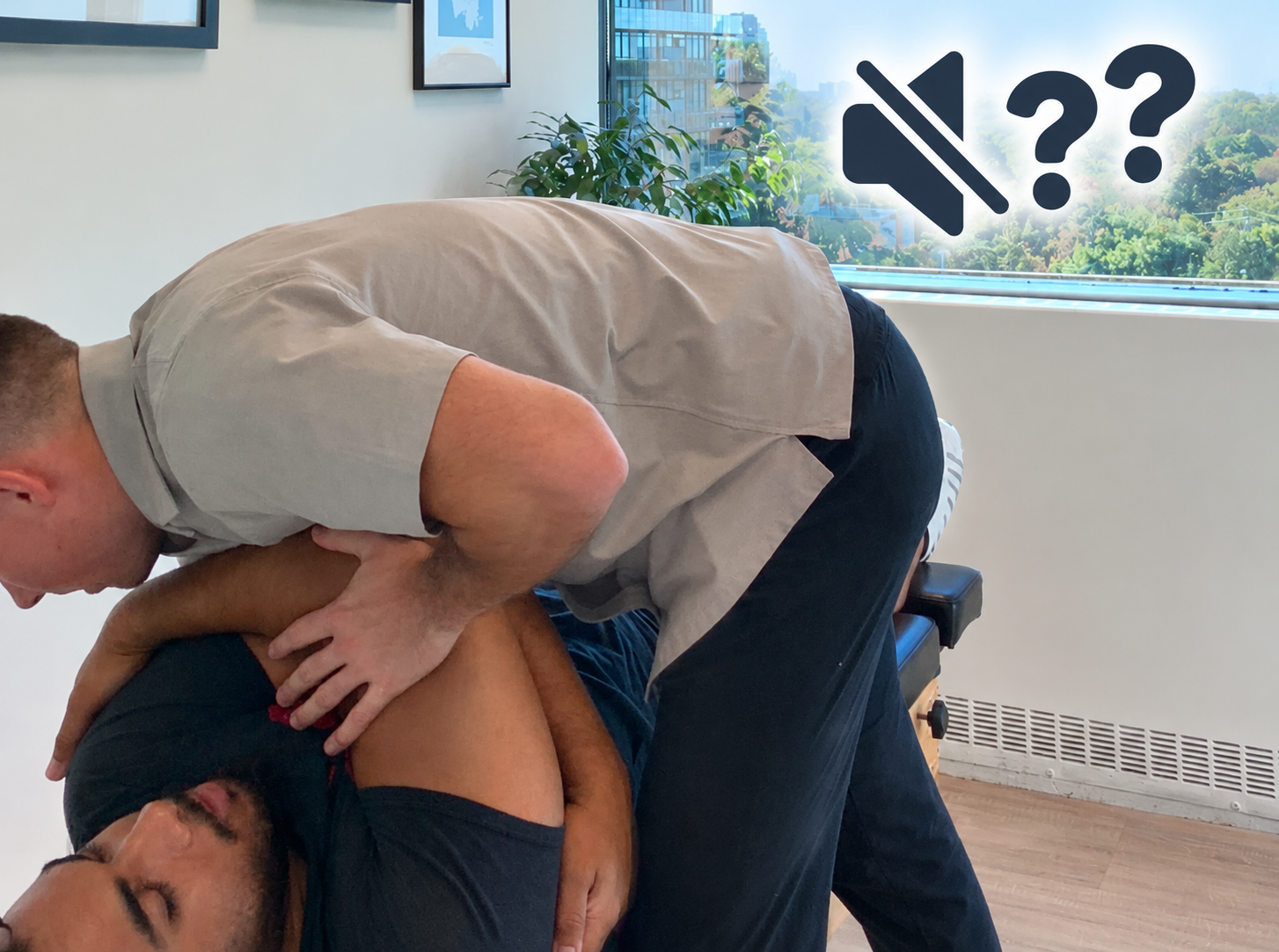
Introduction: The Chiropractic Pop Is Not the Point
If you have ever visited a chiropractor, you may be familiar with the distinctive popping or cracking sound that sometimes accompanies a spinal adjustment.
For many people, that sound has become synonymous with chiropractic care. Some patients even judge the success of their treatment by whether they hear a pop. Others feel anxious about the sound and worry that an adjustment without it might not be effective.
But here is something every patient should know: A chiropractic adjustment does not need to produce an audible pop to have therapeutic value.
Research examining spinal manipulation suggests that the presence of an audible pop is not a reliable indicator of pain relief or clinical improvement. What matters more is the treatment itself, how your body responds, and whether your care helps you move and function better.
At Toronto Top Chiropractor, Dr. Mateusz Krekora emphasizes a patient-centred approach to chiropractic care that looks beyond the sound of an adjustment. Whether you are experiencing neck stiffness after long hours at a Bay Street desk or lower back discomfort that makes cycling along the Don Valley Trail less enjoyable, the goal is to assess your movement, understand your concerns, and choose an appropriate treatment approach.
Let’s explore what the research actually tells us about chiropractic adjustments, joint motion, and the science behind the pop.
What Causes the Popping Sound During a Chiropractic Adjustment?
The audible sound associated with some chiropractic adjustments is commonly called a cavitation.
Certain joints, including the small facet joints of the spine, contain fluid that helps lubricate their surfaces. When a joint is moved or manipulated, changes in pressure within the joint can produce a rapid change in the formation or behaviour of gas cavities within the joint fluid. This process can generate an audible sound.
However, not every adjustment produces this sound.
Whether a pop occurs can depend on several factors, including the technique used, the position of the joint, and the mechanical conditions during the movement.
Importantly, the sound itself does not prove that a specific spinal joint has been corrected, that nerve pressure has been relieved, or that the treatment has been successful.
A 2004 study investigating cavitation during lumbar and thoracic spinal manipulation found that the audible sounds did not necessarily originate from the precise spinal level the practitioner intended to target. This finding challenges the assumption that hearing a pop confirms that a particular joint received the intended treatment.
You can read the original research here: Determining Cavitation Location During Lumbar and Thoracic Spinal Manipulation.
The takeaway is simple: a pop is a physical phenomenon that can accompany an adjustment, but it is not a definitive measure of treatment quality.
What Does Recent Research Say About the Chiropractic Pop?
One of the most relevant publications on this topic is a 2022 systematic review by Moorman and Newell, published in Chiropractic & Manual Therapies.
A systematic review examines multiple studies to identify patterns in the available evidence. This makes it particularly useful when evaluating a commonly held belief about chiropractic treatment.
1. A 2022 systematic review found no consistent pain advantage from audible pops
The researchers reviewed five original studies examining the relationship between audible pops during spinal manipulation and pain outcomes.
The studies included four prospective cohort studies and one randomized controlled trial.
The central finding was that there was no evidence of better pain outcomes when spinal manipulation produced an audible pop.
The researchers also identified evidence that pain sensitivity could decrease following manipulation regardless of whether an audible sound occurred.
Their conclusion was that the presence or absence of an audible pop may not be important for pain outcomes associated with spinal manipulation.
This is an important distinction. It does not mean that every adjustment without a pop will produce the same results for every patient. Rather, the available evidence does not support treating the sound as a necessary ingredient for pain relief.
Read the full paper: Impact of Audible Pops Associated With Spinal Manipulation on Perceived Pain: A Systematic Review (2022).
2. Research on neck pain found no meaningful relationship between the number of pops and clinical improvement
A study by Cleland and colleagues, published in 2007, investigated whether the number of audible pops during thoracic spinal manipulation was associated with improvements in patients experiencing mechanical neck pain.
The researchers examined 78 patients and evaluated outcomes including pain, disability, and cervical range of motion.
Their findings did not demonstrate a meaningful relationship between the number of audible pops and improvements in pain or disability.
In other words, producing more pops did not reliably translate into better clinical outcomes.
Although this study was relatively small and focused on a particular patient population and treatment approach, its findings support the broader message that the sound should not be used as a stand-alone measure of success.
Read the study: The Audible Pop From Thoracic Spine Thrust Manipulation and Its Relation to Short-Term Outcomes in Patients With Neck Pain.
3. The broader evidence supports evaluating pain and function, not just sound
Research on spinal manipulative therapy more generally suggests that it can help some people with musculoskeletal pain, although the degree of benefit varies.
For example, a 2017 systematic review and meta-analysis published in JAMA examined spinal manipulative therapy for acute low back pain.
Across the included randomized controlled trials, the researchers found that spinal manipulation was associated with modest improvements in pain and function over the short term.
However, this research evaluated spinal manipulation as a treatment approach. It did not establish that an audible pop was necessary to obtain those benefits.
That distinction matters: evidence supporting a treatment does not automatically establish that every feature commonly associated with the treatment is responsible for its effects.
Explore the research: Association of Spinal Manipulative Therapy With Clinical Benefit and Harm for Acute Low Back Pain: A Systematic Review and Meta-analysis.
What can we conclude from these studies?
The evidence supports three practical conclusions:
Research specifically investigating audible pops remains limited, so further studies would help clarify the relationship between joint cavitation and different treatment outcomes.
Nevertheless, the available findings do not justify making a popping sound a requirement for effective chiropractic care.
Why Spinal Manipulation Can Be Therapeutic Without a Pop
If the sound is not essential, what makes a chiropractic adjustment potentially beneficial?
The answer lies in the fact that spinal manipulation involves more than producing a sound.
The effects of manual therapy are complex and may involve mechanical, sensory, and nervous-system processes. Researchers continue to investigate how these processes contribute to changes in pain and movement.
Here are some important considerations.
1. Improving joint motion
One reason chiropractors use spinal manipulation is to address restricted or uncomfortable movement.
When a person experiences stiffness in the neck or back, certain movements may become uncomfortable or feel limited. Appropriately selected manual techniques can sometimes help improve range of motion and make movement feel easier.
The important point is that joint movement can change without an audible pop.
A practitioner can use different approaches, including spinal manipulation and gentler spinal mobilization, depending on the patient’s presentation, preferences, and clinical needs.
Mobilization involves controlled joint movements that do not necessarily include the quick thrust commonly associated with a traditional adjustment. It can be performed without any popping sound.
Both approaches may be considered as part of an individualized treatment plan.
The Cochrane review of spinal manipulative therapy for chronic low back pain discusses manipulation and mobilization as hands-on approaches
intended to address pain and function.
2. Supporting comfortable movement
Pain and restricted movement can reinforce one another.
When your back hurts, you may unconsciously avoid bending, turning, or reaching. Over time, this can make everyday activities feel increasingly difficult.
An appropriate manual therapy intervention may help some patients move more comfortably, making it easier to resume normal activities.
For example, a Toronto professional who spends eight hours a day sitting at a desk may find that turning their head or extending their back feels restricted. Treatment aimed at improving comfortable movement may be helpful even if no audible sound occurs.
The meaningful outcome is not whether the treatment was noisy. It is whether movement becomes more comfortable and everyday activities become easier.
3. Influencing pain processing
Pain is not simply a direct measurement of tissue damage. It is an experience shaped by interactions between the nervous system, sensory input, previous experiences, and other individual factors.
Manual therapy can influence how the nervous system processes sensory information. These effects may contribute to short-term changes in pain sensitivity in some people.
The exact mechanisms remain under investigation, and no single explanation accounts for every patient’s response.
Importantly, the research on audible pops suggests that changes in pain sensitivity can occur without a pop being present.
This supports the idea that the sound itself is not necessarily the therapeutic component.
4. Helping you return to the activities you enjoy
Ultimately, chiropractic care should be evaluated in the context of your personal goals.
Can you turn your head more comfortably while driving? Can you sit through a workday with less discomfort? Can you return to walking, exercising, or cycling with greater confidence?
These are meaningful questions to ask when assessing treatment.
A popping sound cannot answer them.
Changes in symptoms, movement, and function provide much more useful information about whether a treatment approach is helping.
NeuroStructural Corrective Care: Looking Beyond the Pop
At Dr. Mateusz Krekora Chiropractic Clinic, the goal is to look beyond an individual symptom.
Our NeuroStructural Corrective Process emphasizes assessing spinal function, posture, movement, and the factors that may contribute to a patient’s musculoskeletal complaints.
This approach begins with an individualized assessment rather than assuming that every patient needs the same technique.
Depending on the findings and your preferences, care may incorporate chiropractic adjustments, electroacupuncture, posture guidance, mobility work, and other appropriate interventions.
For example, someone experiencing neck stiffness after prolonged computer use may benefit from an assessment of neck movement, work habits, and physical activity. Another person with lower back discomfort may require a different evaluation and treatment strategy.
Practical Tips for Maintaining Spinal Mobility in Toronto
Whether or not you receive chiropractic adjustments, your everyday habits can support comfortable movement.
Take movement breaks during your workday
If you work in an office around Bay Street or spend long periods working from home, try breaking up extended sitting with regular movement.
Stand up, walk briefly, and change positions throughout the day. The aim is to avoid remaining in one posture for too long, not to maintain a supposedly perfect posture every minute.
Keep moving within your comfort level
Walking, cycling, and appropriate strengthening exercises can help you maintain physical function.
If you enjoy cycling along the Don Valley Trail, pay attention to how your back and neck feel during and after your rides. Adjusting your activity, bike setup, or training volume may help if discomfort develops.
Choose activities that match your abilities and increase them gradually.
Track changes that matter
Rather than counting how many times your spine pops, pay attention to practical indicators of progress.
Ask yourself:
These observations can help you and your healthcare provider evaluate whether your treatment plan is appropriate.
Conclusion: A Better Adjustment Is About Results, Not Noise
The familiar popping sound of a chiropractic adjustment may be interesting, but it is not a requirement for therapeutic benefit.
Research, including a 2022 systematic review examining audible pops and pain outcomes, has found no convincing evidence that the sound consistently improves the results of spinal manipulation.
Spinal manipulation and mobilization may help some people with musculoskeletal pain and restricted movement. Potential benefits can include improved comfort and function, and these outcomes do not require an audible pop.
At Toronto Top Chiropractor, Dr. Mateusz Krekora believes that chiropractic care should focus on the individual, their clinical needs, and their progress—not on whether a treatment produces a particular sound.
You do not need to hear a pop to take a meaningful step toward moving better.
If neck stiffness, back discomfort, or mobility limitations are affecting your quality of life, an individualized assessment can help you understand your options.
Ready to Feel Strong and Live to the Fullest?
Book your free 20-minute case review with Dr. Mateusz Krekora to discuss your concerns, explore appropriate care options, and take the next step toward moving more comfortably.
This article is for informational purposes only and should not be taken as medical advice. Please consult a licensed chiropractor before starting any treatment.


