September 24, 2026
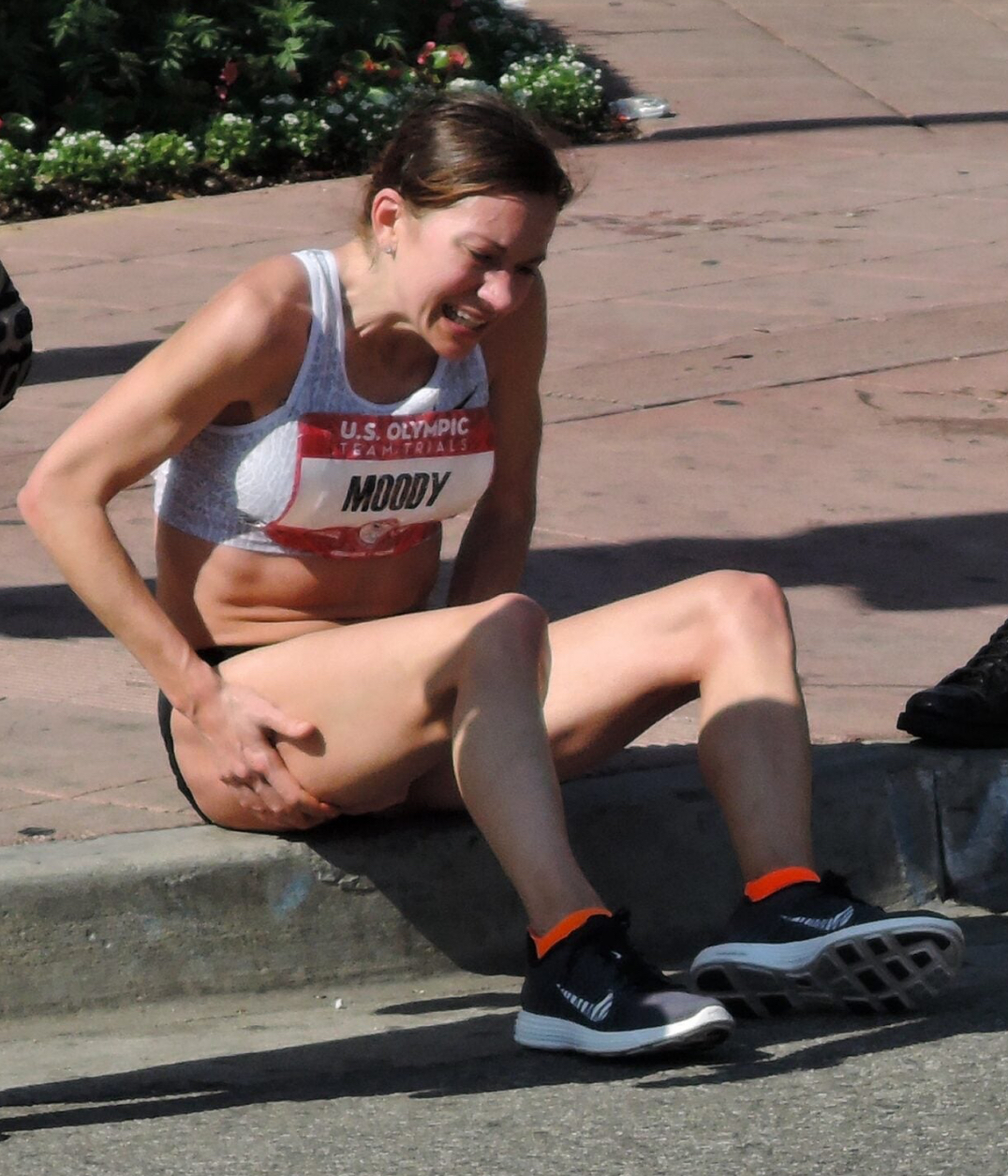
You eat well. You stay hydrated. You take your training seriously. You strength train consistently and make sure you’re getting the nutrients your body needs.
Yet halfway through a long run, your calf suddenly locks up.
For many runners, cyclists and other active people in Toronto, recurring muscle cramps can be incredibly frustrating—especially when the obvious explanations such as poor hydration or micronutrient deficiency don’t seem to apply.
So what else could be contributing?
One possibility that deserves more attention is neuromuscular fatigue and excessive muscular tension.
Research into exercise-associated muscle cramps suggests that cramps are more complicated than simply being a consequence of dehydration or low electrolytes. Current evidence points toward a multifactorial process in which muscular fatigue and altered neuromuscular control can contribute to an involuntary, sustained muscle contraction. PubMed research on exercise-associated muscle cramps supports this neuromuscular fatigue model. (PubMed)
This is where a NeuroStructural approach to chiropractic care may have a role.
At Dr. Mateusz Krekora Chiropractic Clinic in downtown Toronto, I often look beyond the location of a symptom and ask a bigger question:
Why is this particular muscle being overloaded in the first place?
Why Do Muscles Cramp During Exercise?
A muscle cramp is an involuntary and often painful contraction. For runners, cramps commonly appear in the calves, hamstrings or feet, particularly during demanding or prolonged exercise.
Historically, cramps have often been blamed primarily on dehydration or electrolyte loss. These factors can certainly matter in some situations, but they don’t explain every cramping episode.
In fact, research examining exercise-associated muscle cramps has increasingly focused on neuromuscular fatigue and altered control of muscle activity. One proposed mechanism involves an imbalance between excitatory signals from muscle spindles and inhibitory feedback from Golgi tendon organs as muscles become fatigued. Exercise-associated muscle cramp review (PubMed)
Another review similarly concludes that neuromuscular overload and fatigue are important components of the current understanding of exercise-associated cramping, while emphasizing that the condition is multifactorial. PubMed: Exercise-associated muscle cramps (PubMed)
This is particularly relevant for athletes who are doing everything “right” from a nutrition perspective.
You can have adequate magnesium, potassium and other nutrients and still experience cramps.
Why?
Because the problem may not be purely nutritional.
The Overlooked Factor: Excess Muscular Tension
Imagine your training load gradually increases.
You add another weekly run.
Your long run gets longer.
You increase your pace.
You add hill repeats.
You continue strength training.
And perhaps you don’t quite recover enough between sessions.
Your muscles adapt—but they also accumulate fatigue.
Over time, certain muscles may begin doing more work than they should. Other muscles may not be contributing effectively. Your movement strategy can subtly change as fatigue develops.
The result can be increased muscular tension and altered neuromuscular coordination.
Research on neuromuscular fatigue shows that fatigue isn’t simply a problem inside the muscle itself. The nervous system and the communication between the nervous system and muscles also play important roles. Neural contributions to muscle fatigue (PubMed)
This helps explain why simply stretching a repeatedly cramping muscle may not address the bigger picture.
If the muscle continues to be overloaded every time you run, the underlying contributor may still be there.
What Does This Have to Do With Your Spine?
Your muscles don’t operate independently.
Every movement you make—from pushing off the ground while running to stabilizing your pelvis on a single-leg stance—is coordinated by your nervous system.
Your brain, spinal cord, peripheral nerves, joints and muscles work together as one system.
That means restrictions in movement, changes in joint mechanics, poor load distribution or altered movement patterns may potentially influence how certain muscles are recruited.
This is one reason I don’t approach recurring muscle cramps simply by asking, “Which muscle is cramping?”
Instead, I want to understand:
This is where a NeuroStructural examination becomes valuable.
How Corrective Chiropractic Care May Help
Corrective chiropractic care isn’t about simply “cracking” the area that hurts.
The goal is to identify mechanical and neuromuscular factors that may be contributing to the way your body is moving and loading itself.
At my Toronto clinic, this is why I use a comprehensive NeuroStructural assessment before deciding what type of care may be appropriate.
Two tools that may form part of this approach are chiropractic adjustments and electroacupuncture.
1. Chiropractic Adjustments and Neuromuscular Control
A chiropractic adjustment applies a controlled force to a specific joint with the goal of restoring normal movement to it.
Research has demonstrated that spinal manipulation can produce measurable neurophysiological effects, although the exact clinical significance of these effects continues to be investigated. Systematic review of the neurophysiological effects of spinal manipulation (PubMed)
There is also evidence from a systematic review and meta-analysis that spinal manipulation can influence measures of muscular strength in healthy participants, although the authors caution that the available studies are heterogeneous and the findings should be interpreted carefully. Spinal manipulation and muscle strength (PubMed)
From a corrective-care perspective, the purpose isn’t to claim that an adjustment directly “turns off” a cramp.
Rather, an adjustment may be used as part of a broader strategy to improve joint mobility and influence the neuromuscular system.
If a joint isn’t moving well, surrounding muscles may compensate.
If those muscles repeatedly have to stabilize or produce movement under high training loads, they may become overloaded.
Addressing the underlying movement strategy may therefore be one piece of the puzzle.
2. Electroacupuncture and Excess Muscular Tension
NeuroFunctional Acupuncture, including electroacupuncture, takes a different but complementary approach.
Very fine acupuncture needles are placed into carefully selected areas, and a gentle electrical stimulus can be applied between needles.
The objective isn’t simply to “relax a tight muscle.”
Instead, electroacupuncture can be incorporated into a treatment strategy designed to influence painful or overactive tissues and their sensory input.
Research on acupuncture has demonstrated that stimulation can produce local physiological changes, including changes in microcirculation, although researchers emphasize that the evidence is not yet sufficient to draw firm conclusions about these effects. Systematic review of acupuncture and local blood flow (PubMed)
There is also research investigating electrical stimulation as a way of influencing neuromuscular fatigue, although evidence varies considerably according to the stimulation technique and clinical context. Systematic review of physical interventions for neuromuscular fatigue (PubMed)
For this reason, I view electroacupuncture as one component of a larger clinical strategy, rather than a standalone cure for muscle cramps.
The goal is to address the individual athlete’s movement, muscular and neurological findings.
Why a Full NeuroStructural Examination Matters
If your calf keeps cramping during your long runs, repeatedly treating the calf may only tell part of the story.
The calf could be the victim rather than the source of the problem.
For example, your body may be compensating for limitations somewhere else in the kinetic chain.
Perhaps your ankle isn’t moving efficiently.
Perhaps your hip isn’t contributing as effectively as it should.
Perhaps your pelvis isn’t controlling movement well under load.
Perhaps your running mechanics change dramatically as you fatigue.
Or perhaps the primary issue is simply that your training load has exceeded your current recovery capacity.
These possibilities cannot be determined from the location of the cramp alone.
A NeuroStructural examination can help identify relevant physical findings and determine whether chiropractic care is appropriate—or whether another healthcare professional should be involved.
That’s important because muscle cramps can sometimes occur alongside other medical conditions or medication effects. Persistent, unexplained or unusually severe cramping deserves appropriate medical assessment rather than assuming that it is simply a training problem. Clinical approach to athletes with muscular cramps (PubMed)
What Runners in Toronto Can Do Between Treatments
Corrective care works best when it is combined with sensible training and recovery.
If you’re training around Toronto and experiencing recurring cramps, consider the following:
1. Monitor your training load
More isn’t always better.
Rapid increases in mileage, intensity, hill work or strength-training volume can increase fatigue and may contribute to neuromuscular overload.
2. Respect recovery
Your muscles and nervous system need time to adapt.
If every workout is hard, your body may never fully recover before the next stimulus.
3. Don’t automatically blame electrolytes
Hydration and electrolyte management are important, particularly during prolonged exercise and heavy sweating. But current research suggests that exercise-associated cramps cannot be explained by electrolyte imbalance alone. Evidence-based review of exercise-associated muscle cramps (PubMed)
4. Pay attention to when the cramp occurs
Does it happen only after a certain distance?
At a particular pace?
During hills?
At the end of a long run?
Only when you’re fatigued?
These patterns can provide useful information.
5. Look beyond the muscle that hurts
A recurring calf cramp may have contributing factors involving the foot, ankle, knee, hip, pelvis or spine.
That’s why examining the entire movement system can be more informative than repeatedly treating one muscle.
Corrective Chiropractic Care for Muscle Cramps in Toronto
Recurring muscle cramps can be incredibly frustrating—especially when you’re already doing the things you have been told to do.
You are eating properly.
You’re training intelligently.
You’re strength training.
You’re hydrating.
And yet, the cramp keeps coming back.
In these situations, it may be worth looking beyond nutrition and considering the neuromuscular side of the equation.
Current evidence suggests that exercise-associated muscle cramps are multifactorial, with neuromuscular fatigue and altered neuromuscular control playing an important role in many cases. (PubMed)
At Dr. Mateusz Krekora Chiropractic Clinic, my NeuroStructural approach looks at the person as a whole rather than simply chasing the location of the cramp.
Through a comprehensive examination, we can assess your spine, posture, joint movement, muscular tension and movement patterns to help determine what may be contributing to your symptoms.
When appropriate, care may include chiropractic adjustments, NeuroFunctional Acupuncture/electroacupuncture, corrective exercises and strategies to improve movement and recovery.
The goal isn’t simply to help you get through your next run.
It’s to understand your body better so you can keep doing the activities you love.
Feel strong. Live to the fullest.
Book Your Free Case Review and let’s find out what may be contributing to your recurring muscle cramps.
This article is for informational purposes only and should not be taken as medical advice. Please consult a licensed chiropractor before starting any treatment.

.png)
