February 20, 2026
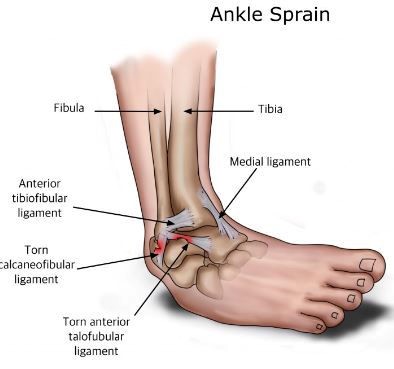
You’re out for a run along the Don Valley Trail or stepping off a streetcar downtown, and suddenly your foot rolls out. Within minutes, your ankle swells, walking becomes painful, and you’re told to “rest and ice it.”
An ankle sprain is one of the most common musculoskeletal injuries. But here’s what most people in Toronto aren’t told: rest alone doesn’t restore function.
If you want to return to cycling, hockey, gym workouts, or simply walking comfortably without fear of re-injury, you need to restore more than just tissue healing. You must restore:
At Dr. Mateusz Krekora Chiropractic Clinic, our NeuroStructural Corrective Process focuses on fixing the root cause—not just calming inflammation.
Let’s break down why that matters.
The Problem: Why Ankle Sprains Keep Coming Back
An ankle sprain typically involves injury to the lateral ligaments when the foot rolls inward (inversion injury).
While ligaments can heal, research published in peer-reviewed literature shows that up to 40% of ankle sprains develop chronic instability if not properly rehabilitated (PubMed – Chronic Ankle Instability Review).
Why?
1. Loss of Proprioception
Ligaments contain mechanoreceptors—specialized nerve endings that tell your brain where your joint is in space. When those ligaments are stretched or torn, proprioceptive signaling decreases.
This means your brain reacts slower to ankle movement, increasing re-injury risk.
According to evidence summarized by the Canadian Chiropractic Association, chiropractic care focuses on optimizing neuromusculoskeletal function—this includes joint position sense and nervous system coordination.
2. Muscle Inhibition (Especially Fibularis Longus)
The fibularis longus (also known as peroneus longus) is a key stabilizer that protects the lateral ankle ligaments.
When the ankle rolls inward:
If this muscle doesn’t react quickly during walking, running, or jumping, the ankle becomes vulnerable again.
3. The Missed Link: The Lower Back
The nerve supply to the fibularis longus originates from the L5-S1 nerve roots in the lower spine.
After an ankle sprain, most treatments focus only on the ankle joint. But if there is irritation, joint dysfunction, or subtle instability in the lower lumbar spine, nerve communication to the ankle may be compromised.
This upstream issue is often overlooked.
Expert Insight (Dr. Mateusz’s Perspective)
At my Toronto clinic, I often see patients who say:
“My ankle sprain happened months ago, but it still feels weak.”
When I evaluate them, I frequently find:
In NeuroStructural Corrective Care, we don’t chase symptoms—we evaluate the entire kinetic chain.
The ankle is not isolated from the spine. Your nervous system controls everything.
If nerve pressure or joint misalignment interferes with that communication, healing slows and instability remains.
How NeuroStructural Care Solves It
1. Precise Chiropractic Adjustments
Chiropractic adjustments aim to restore proper joint motion in both:
Restoring joint motion improves:
This is foundational for recovery.
2. NeuroFunctional Acupuncture for Fibularis Longus Activation
NeuroFunctional Acupuncture is not traditional meridian-based acupuncture. It is a modern, evidence-informed technique targeting:
After an ankle sprain, the fibularis longus often becomes inhibited.
Using targeted NeuroFunctional Acupuncture:
When the fibularis longus activates correctly, it acts as a dynamic stabilizer—reducing strain on healing ligaments.
While research on neurofunctional techniques continues to evolve, growing evidence supports acupuncture’s role in neuromuscular activation and pain modulation (PubMed – Acupuncture and Neuromuscular Function).
Combined with spinal correction, this creates a powerful neurological reset!
3. Proprioceptive Retraining & Corrective Rehab
Healing doesn’t end with adjustments.
We incorporate:
Research consistently shows that balance and neuromuscular training reduce recurrence rates after ankle sprains (PubMed – Neuromuscular Training for Ankle Sprains).
This is critical.
Rest and ice may reduce swelling—but they do not retrain your nervous system.
Why This Approach Works Better Than R.I.C.E Alone
R.I.C.E. (Rest, Ice, Compression, Elevation) has been the traditional early-stage approach.
While short-term swelling control can be helpful, prolonged rest can delay neuromuscular recovery.
Early controlled movement and proper rehabilitation are supported in sports injury literature and recommended by musculoskeletal health authorities.
Local Tips for Toronto Residents Recovering from an Ankle Sprain
Whether you work long hours on Bay Street or play weekend sports in High Park, consider these tips:
✅ Don’t Ignore Persistent Weakness
If your ankle still feels unstable after 2–3 weeks, it likely needs proprioceptive retraining.
✅ Check Your Footwear
Worn-out running shoes reduce ankle stability.
✅ Train Balance Daily
Even brushing your teeth on one leg helps rewire the brain-ankle connection.
✅ Get Your Spine Assessed
If your ankle keeps “giving out,” the issue may be higher up the chain.
At Dr. Mateusz Krekora Chiropractic Clinic, we perform a full NeuroStructural assessment to identify whether your ankle instability is purely local—or neurologically driven.
Conclusion: Heal Stronger, Not Just Faster
An ankle sprain is more than a stretched ligament.
It’s:
Corrective Chiropractic and NeuroFunctional Acupuncture address the root cause, not just inflammation.
When combined with progressive rehabilitation, you don’t just heal—you build resilience.
If you want to feel strong, live to the fullest, and get back to your activities without fear…
👉 Book Your Free Case Review and let’s help you start feeling 25 again.
This article is for informational purposes only and should not be taken as medical advice. Please consult a licensed chiropractor before starting any treatment.

.png)
