December 17, 2025
Introduction
Neck arthritis — medically referred to as cervical osteoarthritis — affects many adults in Toronto who spend long hours at desks, on phones, or driving through busy city streets. It’s more than just “getting older”: cartilage wears down, joint motion becomes restricted, and pain limits everyday movements like looking over your shoulder or turning your head to check traffic. At Dr. Mateusz Krekora Chiropractic Clinic in downtown Toronto, we’ve seen how targeted corrective chiropractic care can improve joint function, reduce pain, and ease the strain caused by forward head posture — all without drugs or surgery.
The Problem: Neck Arthritis & Why It Hurts
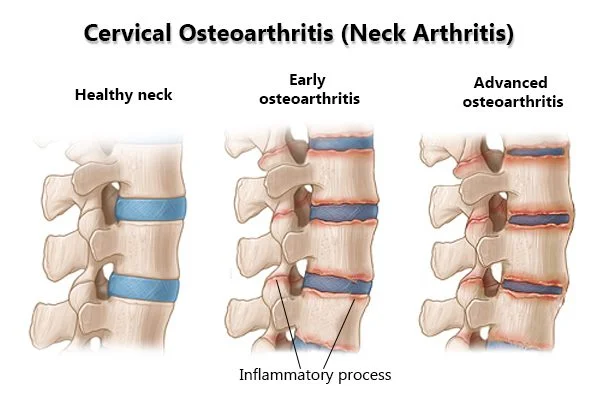
Neck arthritis involves degenerative changes in the joints of the cervical spine. As cartilage thins and joint surfaces become irregular, the joint’s ability to move smoothly deteriorates. This leads to:
In an aging joint, buildup of bone spurs and uneven motion patterns cause surrounding muscles and nerves to become strained, which amplifies discomfort.
Compounding the issue for many Toronto residents is forward head posture — a common result of long hours at a desk on Bay Street, leaning over laptops, or scrolling on phones. When the head shifts forward, it increases stress on the lower cervical joints and overstretches the muscles in the back of the neck. This misalignment not only accelerates wear on arthritic joints, it also heightens pain and fatigue.
Expert Insight with Dr. Krekora: How Corrective Chiropractic Helps
At the heart of corrective chiropractic care is the belief that joint motion matters — and when joints aren’t moving well, pain and dysfunction follow.
1. Restoring Joint Mobility
One of the primary goals of a chiropractic adjustment (sometimes called spinal manipulation) is to gently guide a joint through its normal range of motion. This helps to:
By restoring motion rather than forcing movement, chiropractic adjustments can help improve how the joints glide and rotate. Better joint motion often translates to less pain and increased comfort when performing daily activities.
2. Reducing Protective Muscle Tension
When arthritic joints become stiff, surrounding muscles tighten to “protect” the area. Unfortunately, this protective tension can become chronic, leading to:
Chiropractic care addresses not only the joint itself but also the soft tissues around it, reducing tension so muscles can relax and support healthy movement patterns more effectively.
3. Improving Posture — Especially Forward Head Posture
Forward head posture — where the head sits ahead of the shoulder line — increases the effective weight of the head on the neck. Every inch forward can significantly increase the load on the lower cervical joints and discs. Corrective chiropractic care helps by:
Studies show that posture influences head and neck stabilization — and that poor posture can make tasks requiring neck control more difficult.
By addressing structural alignment and encouraging better posture, chiropractic care reduces repetitive stress on arthritic structures and helps slow painful feedback loops between posture, muscle tension, and joint degeneration.
4. Enhancing Nervous System Function
Healthy joints and good posture aren’t just about bones and muscles — they affect the nervous system too. Misaligned joints can irritate nerve endings and interfere with signals between your brain and body. Corrective chiropractic adjustments and Electroacupuncture can help:
This enhanced communication can contribute to reduced pain perception and improved neck function, especially important when arthritis alters how your joints move.
What Does a Chiropractic Adjustment Actually Do?
A chiropractic adjustment is a precise, controlled movement applied to a joint. In the context of neck arthritis, the chiropractor:
This procedure helps the joint move more freely, which can reduce tension around nerves and muscles and often leads to immediate improvements in comfort and range of motion.
Importantly, adjustments don’t force movement; they help the body regain its own natural motion safely within its functional limits.
Local Toronto Posture & Lifestyle Tips
In addition to chiropractic adjustments, managing neck arthritis in Toronto involves practical postural habits:
✔ Optimize Your Workspace
Whether you’re working in the Financial District or studying at U of T, keep your screen at eye level and your chair supportive. This reduces forward head posture and stress on your cervical joints.
✔ Take Frequent Movement Breaks
Micro-breaks every 30–45 minutes to gently move your neck can help maintain mobility and reduce stiffness.
✔ Strengthen Postural Muscles
Exercises such as chin tucks and shoulder blade squeezes support the deeper muscles that stabilize the neck and upper back.
✔ Mindful Phone and Tablet Use
Holding devices at eye level instead of down at your lap can significantly reduce strain on the neck.
These small changes work synergistically with chiropractic care to reduce the mechanical stress that worsens arthritic pain.
What Patients Typically Notice after Corrective Chiropractic Care
While every case is different, many people with neck arthritis report:
These changes often emerge gradually as mobility improves and lifestyle habits shift.
Conclusion
Neck arthritis doesn’t have to define your daily life in Toronto. Through corrective chiropractic care, we focus on restoring joint motion, reducing painful tension, and improving posture, especially forward head posture that amplifies stress on cervical joints. By combining corrective adjustments with posture education and lifestyle strategies, you can experience real, meaningful relief.
If neck stiffness, discomfort, or reduced movement is holding you back, we’re here to help you feel stronger and more capable — ready to enjoy life without limits.
Book your free 20-minute neck arthritis case review today and start feeling like you’re 25 again.
This article is for informational purposes only and should not be taken as medical advice. Please consult a licensed chiropractor before starting any treatment.

.png)
