November 16, 2026
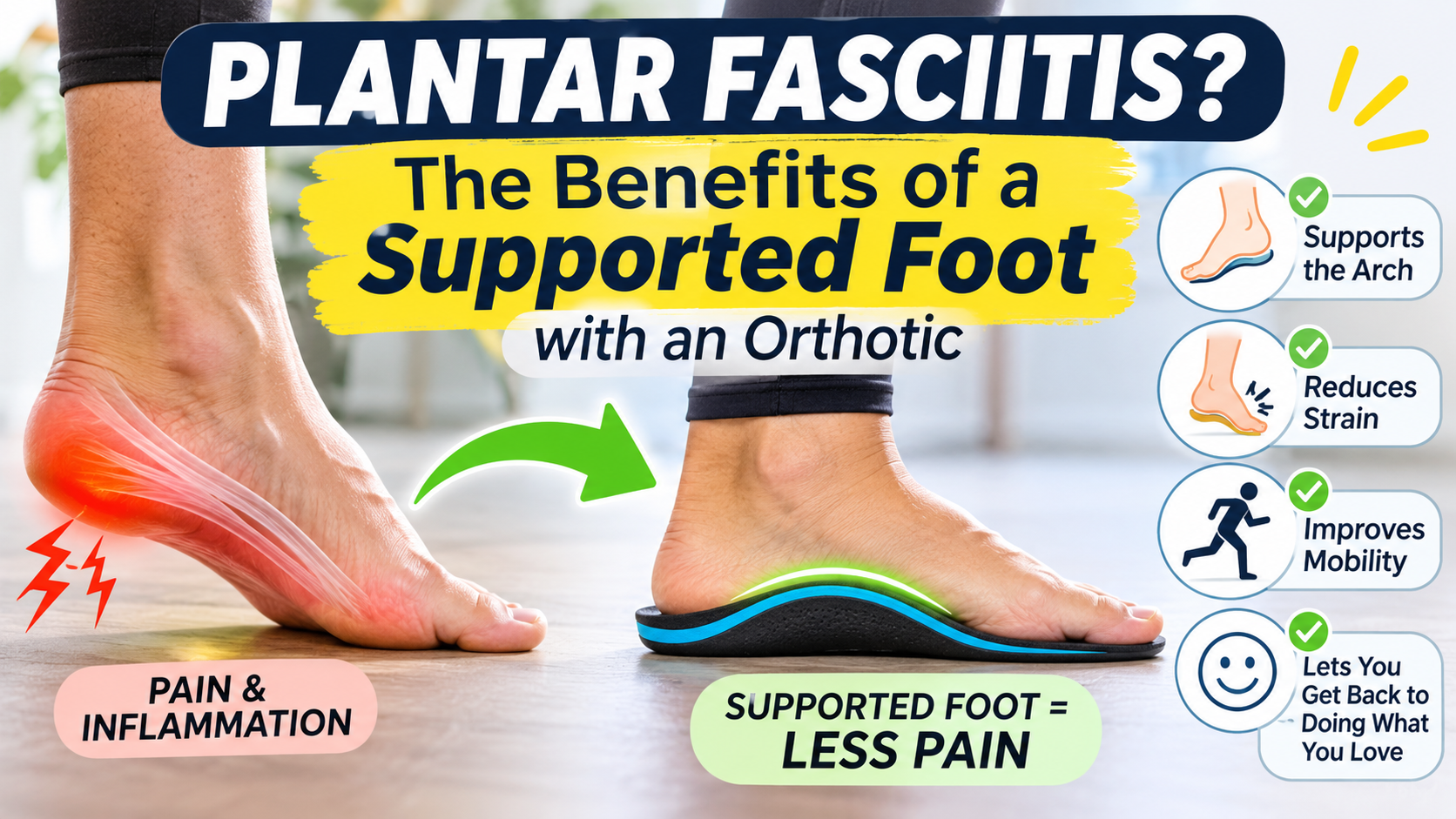
Introduction: Could Custom Orthotics Be the Missing Piece in Your Plantar Fasciitis Recovery?
Does your heel hurt when you take your first steps out of bed in the morning? Do you experience sharp, stabbing pain in the bottom of your foot after standing, walking or exercising?
If so, you may be experiencing plantar fasciitis.
Plantar fasciitis is one of the most common causes of heel pain and can significantly interfere with everyday activities. Whether you’re walking through downtown Toronto, commuting to work, exercising along the Martin Goodman Trail or spending hours standing throughout the day, persistent heel pain can make even simple activities uncomfortable.
One treatment option worth considering is custom foot orthotics.
As a Toronto chiropractor specializing in NeuroStructural Corrective Care, I often explain to patients that their feet are the foundation of their body’s movement. How your feet interact with the ground can influence the mechanics of your ankles, knees, hips and spine.
Custom orthotics can be a valuable tool in managing plantar fasciitis by providing individualized foot support, redistributing pressure and helping optimize foot mechanics.
However, I believe it’s important to look beyond the painful area.
At Dr. Mateusz Krekora Chiropractic Clinic, custom orthotics are one component of a broader approach. My goal is to understand why the problem developed in the first place through a comprehensive NeuroStructural examination.
Let’s explore how custom orthotics work, what the research says and why identifying the underlying contributors to plantar fasciitis matters.
What Is Plantar Fasciitis?
The plantar fascia is a thick band of connective tissue running along the bottom of your foot. It connects your heel bone to the base of your toes and helps support the arch of your foot.
It plays several important roles:
When excessive or repetitive mechanical stress affects the plantar fascia, it can become irritated and painful.
Common symptoms include:
Although the condition is commonly called plantar fasciitis, chronic cases can involve degenerative changes within the plantar fascia rather than inflammation alone.
This is one reason why simply trying to reduce inflammation may not address every contributing factor.
How Can Custom Orthotics Help With Plantar Fasciitis?
Custom orthotics are individually designed shoe inserts intended to support the feet and influence how forces are distributed during standing, walking and other weight-bearing activities.
Unlike generic cushioning insoles, custom orthotics are designed with an individual’s foot characteristics and functional requirements in mind.
Here are five potential benefits for people experiencing plantar fasciitis.
1. Supporting the Natural Arch of Your Foot
One of the primary functions of a foot orthotic is to provide support to the medial longitudinal arch.
When the arch is not adequately supported during weight-bearing activities, the plantar fascia may experience increased mechanical loading in certain individuals.
A properly selected orthotic can help support the arch and influence how the foot moves during walking.
This may help reduce excessive strain on sensitive structures, including the plantar fascia.
Importantly, not everyone with plantar fasciitis has flat feet. Orthotic support should be based on an individual’s examination rather than assuming everyone needs the same correction.
2. Redistributing Pressure Across the Foot
Every time you take a step, your feet absorb and transfer forces generated by your body weight and movement.
When pressure is concentrated in particular areas, certain tissues may experience increased loading.
Custom orthotics can help redistribute plantar pressure across different regions of the foot.
For someone experiencing plantar fasciitis, this may help reduce excessive pressure around the heel and improve comfort during everyday activities.
This can be particularly helpful for people who spend long hours standing or walking, including healthcare professionals, teachers, retail workers and downtown Toronto office employees.
3. Improving Foot Mechanics During Walking
Your feet are constantly adapting to the surfaces beneath them.
During walking, your foot moves through different phases of loading, weight transfer and push-off.
Custom orthotics can influence these mechanics by providing individualized support and modifying how forces travel through the foot.
For certain individuals, this may help improve comfort and make walking more tolerable.
The objective isn’t necessarily to create a perfectly positioned foot. Rather, it’s to find a level of support that helps the individual move more comfortably and efficiently.
4. Reducing Stress on the Plantar Fascia
The plantar fascia experiences tension during everyday activities, particularly when your foot supports your body weight.
Orthotics may help modify this loading by supporting the arch and influencing foot movement.
By redistributing pressure and changing the mechanics of weight-bearing, orthotics may reduce some of the repetitive stress experienced by the plantar fascia.
This can be particularly beneficial when orthotics are incorporated into a comprehensive rehabilitation program that includes appropriate exercises and activity modifications.
5. Improving Comfort During Everyday Activities
Ultimately, one of the most important goals of plantar fasciitis treatment is helping you return to the activities you enjoy.
Whether that means walking around Toronto, exercising, travelling, playing sports or simply getting out of bed without heel pain, improving daily function matters.
Custom orthotics may help make these activities more comfortable by providing consistent support inside your footwear.
They are not an overnight solution, but they can be a useful component of a longer-term recovery strategy.
What Does the Research Say About Custom Orthotics for Plantar Fasciitis?
It’s important to distinguish between what orthotics can potentially accomplish and what scientific research has actually demonstrated.
Fortunately, several systematic reviews and clinical studies have investigated their effectiveness.
Research Study #1: Custom Orthotics Can Reduce Short-Term Pain
A 2023 systematic review and meta-analysis published in the British Journal of Sports Medicine examined the effectiveness of different treatments for plantar fasciitis.
Researchers analyzed 28 clinical trials investigating 17 different therapies.
Their findings demonstrated moderate-certainty evidence that customized orthoses reduced short-term pain compared with control interventions.
The reported mean difference was 12 points on a 100-point pain scale.
This suggests custom orthotics can provide meaningful short-term pain relief for some individuals.
However, the researchers noted that long-term effects and improvements in disability remain uncertain.
Research Study #2: Custom Orthotics and Plantar Pressure Distribution
A randomized controlled trial published in 2022 investigated the effects of custom foot orthotics designed using dynamic plantar pressure measurements.
The study involved 34 individuals with chronic plantar fasciitis.
Researchers compared participants receiving custom orthotics alongside night splints with participants receiving night splints alone.
After four weeks, the orthotic group demonstrated improvements in pain, plantar fascia thickness and several quality-of-life measures.
The findings suggest that individualized orthotic support may help modify foot loading and improve symptoms when incorporated into a broader treatment approach.
Although encouraging, this was a relatively small study, and its results should not be interpreted as proof that custom orthotics work equally well for everyone.
Research Study #3: Custom Orthotics Versus Prefabricated Orthotics
An important question patients frequently ask is:
Are custom orthotics actually better than store-bought orthotics?
A 2022 evidence review by Canada’s Canadian Agency for Drugs and Technologies in Health (CADTH) examined custom-made foot orthotics for several lower-limb conditions.
For adults experiencing plantar heel pain, researchers found no statistically significant differences between custom-made and prefabricated orthotics.
The review also identified limited evidence supporting short-term pain relief and quality-of-life improvements with custom orthotics compared with placebo or no intervention.
This is an important distinction.
Custom orthotics are not automatically superior simply because they are individually manufactured.
Their potential value comes from whether their design addresses the individual’s particular foot mechanics, symptoms and functional requirements.
Research: Custom-Made Foot Orthotics for People With Lower Limb Conditions – CADTH
What Is the Overall Takeaway?
The research suggests that foot orthotics can help reduce plantar fasciitis pain, particularly in the short term.
However, the evidence does not support using orthotics as a standalone solution.
The 2023 clinical practice guidelines published in the Journal of Orthopaedic & Sports Physical Therapy specifically recommend that clinicians avoid using custom or prefabricated orthoses as an isolated treatment for short-term pain relief.
Instead, orthotics may be used alongside other treatments to help reduce pain and improve function.
This is consistent with my approach to plantar fasciitis: address the foot, but don’t forget to evaluate the rest of the body.
Research: 2023 Clinical Practice Guidelines: Heel Pain – Plantar Fasciitis
Why I Recommend a Full NeuroStructural Examination
Here’s something I want patients to understand.
Just because your heel hurts doesn’t necessarily mean the heel is the only area that needs attention.
Your feet are part of an interconnected musculoskeletal system. Their function is influenced by the mechanics of your ankles, knees, hips and pelvis, as well as your overall movement patterns.
For example, consider someone who spends eight hours sitting at a desk on Bay Street before walking several kilometres home.
They may have limited ankle mobility, reduced calf flexibility, altered foot mechanics or weaknesses affecting their lower extremities.
These factors may influence how forces are distributed through their feet.
If we focus exclusively on the painful heel, we may overlook other potentially modifiable contributors.
This is why I recommend a comprehensive NeuroStructural examination for patients experiencing plantar fasciitis.
Depending on the individual’s presentation, this assessment may include:
1. Foot and Arch Assessment
Evaluating foot structure, arch characteristics, weight distribution and how the feet respond during standing and movement.
2. Gait Analysis
Observing walking mechanics to identify movement patterns that may contribute to excessive or uneven loading.
3. Ankle and Lower-Limb Mobility
Assessing ankle range of motion, calf flexibility and the mobility of surrounding joints.
4. Lower-Extremity Strength and Stability
Evaluating relevant muscle groups, including the calf and intrinsic foot muscles, to identify potential functional limitations.
5. NeuroStructural Assessment
Examining relevant spinal and pelvic mechanics, posture and neurological function where clinically indicated.
The objective is to develop a better understanding of the factors contributing to your symptoms rather than simply focusing on where you experience pain.
How Custom Orthotics Fit Into My NeuroStructural Approach
At Dr. Mateusz Krekora Chiropractic Clinic, I view custom orthotics as one tool within a comprehensive approach to musculoskeletal health.
My NeuroStructural Corrective Process focuses on identifying and addressing relevant functional and mechanical contributors to a patient’s condition.
For plantar fasciitis, this may involve combining several strategies.
Custom orthotics: Individually selected foot support to help redistribute pressure and improve comfort during weight-bearing activities.
Chiropractic care: Addressing relevant joint mobility restrictions and musculoskeletal dysfunction identified during the examination.
Mobility enhancement: Improving ankle mobility and calf flexibility where limitations are present.
Corrective exercises: Developing foot and lower-extremity strength to improve the body’s ability to tolerate everyday activities.
Postural and movement assessment: Identifying movement patterns that may contribute to inefficient loading throughout the lower extremities.
Not every patient requires every intervention.
The appropriate approach depends on the examination findings, individual goals and response to treatment.
My objective is to help you move better, feel stronger and return to the activities that make life enjoyable.
Five Practical Tips for Managing Plantar Fasciitis in Toronto
Alongside professional care, there are several practical strategies that may help manage plantar fasciitis.
If your heel pain persists, worsens or interferes with your daily activities, consider having it professionally assessed.
Conclusion: Treat the Cause, Not Just the Pain
Plantar fasciitis can be frustrating, especially when heel pain prevents you from enjoying everyday activities.
Custom orthotics can be a valuable component of treatment by supporting the foot arch, redistributing pressure and potentially reducing mechanical stress on the plantar fascia.
Research supports their potential to provide short-term pain relief, particularly when combined with other appropriate interventions.
However, orthotics are not a universal solution, and simply placing an insert inside your shoes may not address all the factors contributing to your symptoms.
This is why I believe a comprehensive NeuroStructural examination is so important.
At Dr. Mateusz Krekora Chiropractic Clinic, my goal is to look beyond the painful area, understand your individual biomechanics and develop an approach that supports better movement and long-term musculoskeletal health.
You don’t have to accept heel pain as a normal part of getting older or being active.
Whether you’re struggling with your first steps in the morning or finding it difficult to enjoy your daily walks around Toronto, let’s investigate what’s contributing to the problem.
Ready to feel like you’re 25 again?
Book your free 20-minute case review today. Let’s find out what’s contributing to your pain and explore how we can help you feel strong and live to the fullest.
Medical Disclaimer: This article is for informational purposes only and should not be taken as medical advice. Please consult a licensed chiropractor before starting any treatment.


