March 20, 2026
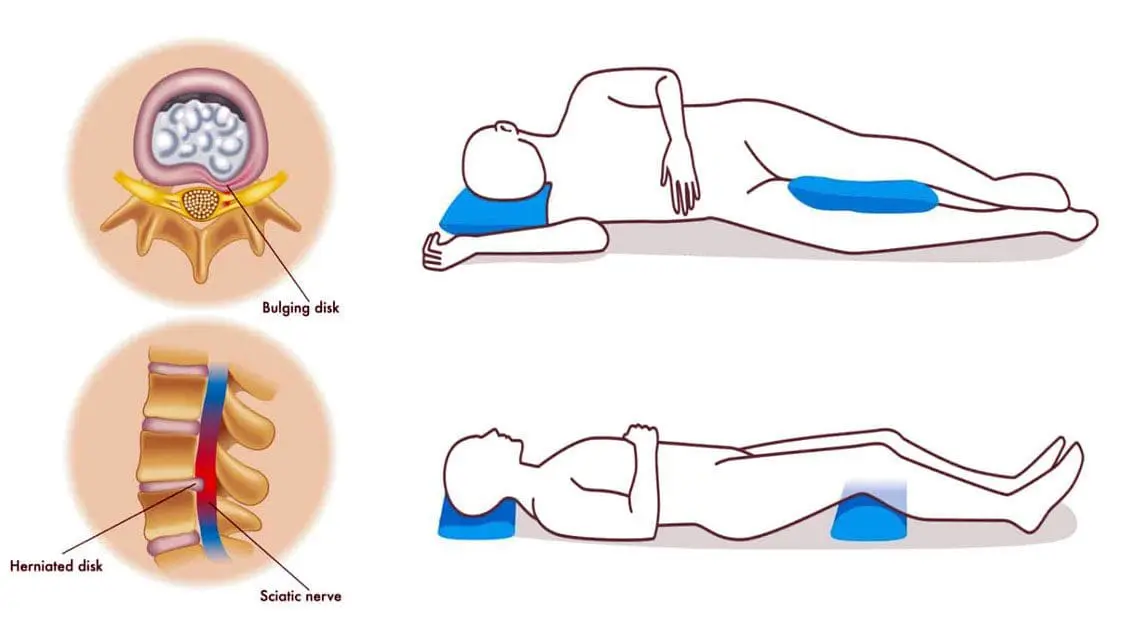
If you’ve ever tried to sleep with a lumbar disc herniation, you know how frustrating nights can become.
Many of my patients in Toronto tell me the same thing: the pain isn’t always worst during the day—it’s when they finally lie down at night that the discomfort really starts.
Whether you spent the day sitting at a desk on Bay Street, commuting on the TTC, or cycling along the Don Valley Trail, pressure on the lower spine can accumulate. When a herniated disc compresses nearby nerves, even small changes in sleeping position can aggravate symptoms.
The good news?
Simple adjustments—especially strategic pillow placement—can significantly reduce strain on your spine while you sleep.
At my Toronto clinic, I regularly teach patients with disc injuries how to use pillows to support proper spine alignment and reduce nerve irritation overnight.
Let’s explore the most comfortable sleeping positions for people dealing with a lumbar disc herniation.
The Problem or Symptom
A lumbar disc herniation occurs when the inner gel of a spinal disc pushes outward through the disc’s outer layer. This can irritate nearby spinal nerves, potentially causing:
According to the Canadian Chiropractic Association, spinal disc injuries are one of the most common causes of persistent lower back pain.
Nighttime can become particularly uncomfortable because certain sleeping positions can:
Research summarized by the Government of Canada’s low back pain guidelines notes that maintaining neutral spinal alignment during rest helps reduce mechanical stress on the spine.
This is where pillows become extremely helpful tools.
Expert Insight (Dr. Mateusz’s Perspective)
At Dr. Mateusz Krekora Chiropractic Clinic in Toronto, many patients come to see me after weeks or months of poor sleep due to back pain.
One thing I often notice is that patients are sleeping in positions that worsen spinal stress without realizing it.
For example:
Small positioning adjustments can dramatically reduce irritation on the spinal nerves and surrounding tissues.
While sleeping positions won’t heal a disc injury on their own, reducing nightly irritation allows the body to recover more effectively.
How NeuroStructural Care Solves It
Before we discuss pillows, it’s important to understand the underlying issue.
A herniated disc is often related to long-term spinal misalignment and abnormal loading patterns. Over time, poor posture, repetitive stress, or previous injuries can create uneven pressure on spinal discs.
At my clinic, we focus on NeuroStructural Corrective Care, which aims to:
Research published in PubMed suggests that spinal manipulation and conservative care can help improve symptoms in many patients with disc-related back pain.
However, while corrective care addresses the root cause, improving sleep posture can make a huge difference immediately.
Let’s look at the most comfortable pillow setups.
Best Sleeping Positions with a Lumbar Disc Herniation
1. Sleeping on Your Back with a Pillow Under Your Knees
This is often the most spine-friendly position.
Place a pillow underneath your knees so they remain slightly bent.
Benefits:
You can also add a small rolled towel under the lower back if you need additional support.
2. Side Sleeping with a Pillow Between the Knees
For many people, side sleeping feels more natural.
However, without support, the top leg can rotate forward, twisting the pelvis and stressing the lower back.
To prevent this:
Place a firm pillow between your knees.
Benefits:
Many Toronto patients who sleep on their side report immediate relief after trying this.
3. The “Fetal Position” Variation
For individuals with severe disc herniation pain, a slightly curled fetal position may help.
Steps:
This position may open up space between spinal vertebrae, temporarily reducing nerve pressure.
However, avoid curling too tightly, as extreme flexion may irritate some discs.
4. Reclined Sleeping Position
Some patients experience the most comfort in a reclined position, similar to sitting in a reclining chair.
You can recreate this in bed by:
This position can help reduce disc compression and sciatic nerve tension.
Positions to Avoid
Certain sleeping positions often worsen disc irritation.
Stomach sleeping is typically the most problematic because it:
If you must sleep on your stomach, place a thin pillow under your pelvis to reduce spinal arching.
Local Tips for Recovery and Maintenance
In addition to better sleep positioning, small daily habits can help reduce stress on your spine.
Improve Your Desk Posture
Many Toronto professionals spend long hours at desks.
Poor sitting posture increases lumbar disc pressure.
Try:
Stay Active
Gentle movement supports spinal health.
Walking, light stretching, and mobility work help maintain disc nutrition and circulation.
The Ontario Chiropractic Association notes that staying active is often recommended for managing lower back pain.
Address the Root Cause
If pillow positioning helps but pain keeps returning, it may indicate a deeper structural issue in the spine.
At my clinic, I frequently see patients who tried:
Yet the underlying spinal misalignment remained.
Corrective chiropractic care focuses on identifying and correcting the root structural stress contributing to disc irritation.
Conclusion
Sleeping with a lumbar disc herniation can be incredibly challenging, but the right pillow positioning can make a meaningful difference.
The most helpful strategies include:
These adjustments help maintain neutral spine alignment and reduce nerve pressure, allowing your body to rest and recover overnight.
However, if sleep discomfort continues despite these changes, it may be time to look deeper at the structural health of your spine.
At Dr. Mateusz Krekora Chiropractic Clinic in Toronto, we focus on identifying the root cause of spinal problems through our NeuroStructural Corrective Process—not just masking symptoms.
If you’re ready to take the next step toward long-term relief:
👉 Book Your Free Case Review and start feeling strong again—maybe even like you’re 25.
This article is for informational purposes only and should not be taken as medical advice. Please consult a licensed chiropractor before starting any treatment.

.png)
