February 27, 2026
If you’ve ever tossed and turned at 2 a.m. because of low back pain, you know how frustrating it can be. Many of my Toronto patients—whether they work long hours on Bay Street or stay active cycling along the Don Valley Trail—tell me their pain feels worse at night.
As a Toronto chiropractor, one of the most common questions I hear is: “How should I sleep when my lower back is flared up?”
Sleep is when your body should repair and restore. But poor positioning, worn-out pillows, or an unsupportive mattress can increase spine misalignment and nerve pressure, making recovery harder.
Let’s break down how to sleep with low back pain, what may be contributing to it, and how to address the root cause.
The Problem: Why Low Back Pain Gets Worse at Night
Low back pain is extremely common. According to the Government of Canada, back problems are among the leading causes of disability in Canada. Poor posture, prolonged sitting, repetitive strain, and structural imbalances all play a role.
When you lie down, gravity shifts—but your spine still needs proper support. If your mattress is too soft, too old, or sagging, your pelvis can sink unevenly. This creates stress on spinal joints and surrounding muscles.
Research published in the journal The Lancet suggests that medium-firm mattresses may reduce chronic low back pain more effectively than very firm ones (Kovacs et al., 2003). While individual comfort varies, excessive softness is often problematic.
Common Sleep-Related Triggers for Flare-Ups:
Many people forget that pillows often need replacement every ~5 years and mattresses every ~8–10 years. These timelines vary depending on body weight, usage, and material quality—but if your mattress has visible sagging or you wake up stiff daily, it’s worth investigating.
Expert Insight: Dr. Mateusz Krekora’s Perspective
At Dr. Mateusz Krekora Chiropractic Clinic in Downtown Toronto, I frequently see patients who believe their pain is “just from sleeping wrong.”
But sleeping position is usually not the root cause—it’s an aggravating factor.
Low back pain often stems from:
If the spine alignment is already compromised, an unsupported sleep posture can amplify stress on joints and discs overnight.
This is why my NeuroStructural Corrective Process focuses on identifying structural distortions—not just temporarily easing muscle tightness.
How to Sleep with Low Back Pain: Proven Strategies
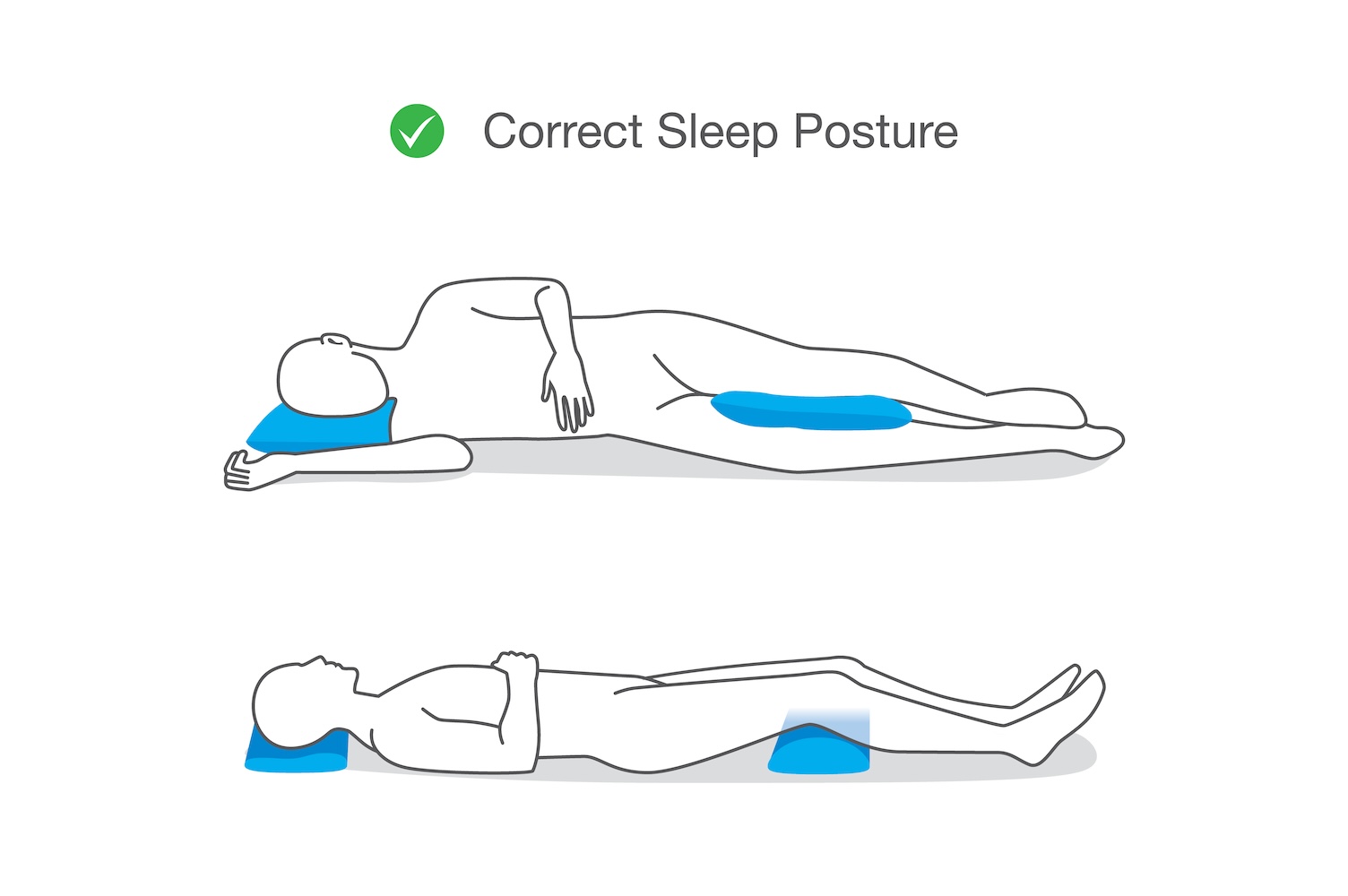
1. Best Setup for Back Sleepers
Sleeping on your back can be excellent—if supported properly.
Pillow Strategy:
Why this works:
Elevating the knees reduces strain on the lumbar spine and decreases anterior pelvic tilt. It helps maintain a neutral spine position.
If your mattress is too soft and your hips sink lower than your upper back, your spine may fall into extension—worsening discomfort.
2. Best Setup for Side Sleepers
Side sleeping is the most common position in Canada. However, without support, it can twist the pelvis.
Pillow Strategy:
Why this works:
The pillow keeps your hips level and reduces rotational stress on the lower back.
If your top knee drops forward, it pulls your pelvis into rotation—creating tension in the lumbar spine.
For patients with flare-ups, I often recommend temporarily using a thicker knee pillow to stabilize the pelvis overnight.
3. Positions to Avoid During a Flare-Up
Stomach Sleeping
This position increases lumbar compression and forces the neck into rotation. According to the Canadian Chiropractic Association, maintaining proper spinal alignment is key to reducing mechanical stress on joints.
If you absolutely cannot break the habit:
But ideally, transition to side or back sleeping gradually.
Is Your Mattress Making Things Worse?
A surprising number of low back pain cases are aggravated by outdated bedding.
Signs Your Mattress May Be Contributing:
While research is ongoing, current evidence suggests that a medium-firm mattress may promote better spinal alignment than overly soft options.
Soft, aging mattresses often allow excessive hip sinking, increasing nerve pressure and joint strain.
Remember:
Every person is different. Body weight, sleep style, and spinal structure influence ideal support. If unsure, a structural spinal assessment can help guide your choice.
How NeuroStructural Corrective Care Solves the Root Cause
Pillow hacks help manage symptoms—but they don’t correct underlying structural imbalances.
At my Toronto clinic, we use the NeuroStructural Corrective Process to:
The Ontario Chiropractic Association notes that chiropractic care is effective for managing mechanical low back pain. When structural issues are addressed, patients often find their sleep naturally improves.
Corrective chiropractic is not about temporary relief—it’s about long-term stability.
When your spine is balanced:
Local Tips for Recovery and Maintenance in Toronto
To support your back between treatments:
Daily Habits:
Evening Wind-Down Routine:
Consistency matters. Small nightly improvements can significantly reduce flare-up frequency.
When to Seek Professional Help
If your low back pain:
It’s time to assess the underlying structure.
Sleep positioning is supportive—but lasting relief requires identifying why the flare-ups keep happening.
Conclusion: Feel Strong, Live to the Fullest
Low back pain at night is common—but it’s not something you have to accept.
With:
You can restore restful sleep and wake up feeling strong again.
At Dr. Mateusz Krekora Chiropractic Clinic, we focus on correcting the root cause of pain—not masking it.
Ready to feel like you’re 25 again?
👉 Book Your Free Case Review and start your journey toward lasting relief.
This article is for informational purposes only and should not be taken as medical advice. Please consult a licensed chiropractor before starting any treatment.

.png)
