January 23, 2026
Introduction: When Knee Pain Isn’t Just a Knee Problem
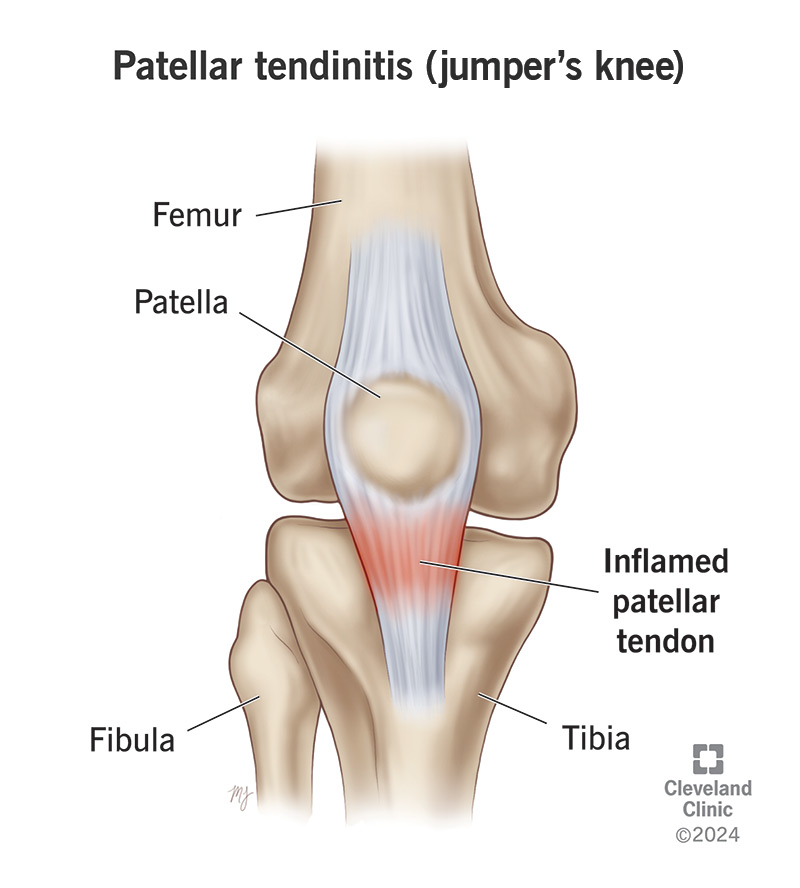
Imagine this: you’re in Toronto’s volleyball league, or you’re training to tackle the hills around Don Valley. Then bam — pain right below your kneecap every time you jump, run, or squat. That’s often jumper’s knee, medically known as patellar tendinopathy — a degenerative overuse condition of the tendon that connects your kneecap to your shinbone. It’s common in jumping sports and activities with repetitive knee loading.
Many athletes and active Torontonians are told to “just strengthen the quads.” But the knee doesn’t operate in isolation — and treating it that way often leads to slow progress or recurring pain.
What Jumper’s Knee Really Is
Despite the name tendinitis, jumper’s knee is not simply inflammation. Modern research shows it’s more accurately a tendinopathy — a chronic degenerative change in the tendon caused by repetitive stress and micro-tears, not an acute inflammatory process.
Symptoms often include:
The condition is common in sports requiring explosive leg power (e.g., basketball, volleyball, track events).
Why Traditional Rehab Often Falls Short
Many physiotherapists, Chiropractors and trainers begin and end their treatment plans with quadriceps strengthening and isolated knee exercises like decline squats or leg extensions. While these can be part of a rehab program, focusing mainly on quad work overlooks critical parts of the kinetic chain.
Here’s why that matters:
1. You’re Not Just a Knee — You’re a Chain
The knee is biomechanically linked to the hip, glutes, pelvis, and low back. Weakness or poor control in the glutes or core can cause the quads and patellar tendon to overwork, increasing tendon stress. Research on jumper’s knee indicates that biomechanical abnormalities — such as faulty movement patterns or imbalances — play a role in ongoing tendon stress.
2. Quadriceps Dominance Isn’t the Only Issue
Many patients with jumper’s knee show quadriceps dominance — meaning the quads are doing most of the work because hip and core musculature aren’t contributing effectively. This puts extra load on the patellar tendon.
3. Glutes and Hip Stability Matter
Research and clinical practice increasingly recognize that weak hip abductors and gluteal muscles can lead to altered knee mechanics and increased tendon strain. Strengthening these muscles helps redistribute forces away from the patellar tendon.
4. The Low Back’s Hidden Role
The lower back and pelvis influence nerve function to the entire lower limb. If spinal joints are restricted or nerve signaling to the glutes and hips is impaired, the body compensates with other muscles — often the quads — increasing tendon stress. Corrective care recognizes this neuro-muscular linkage.
How Corrective Chiropractic Looks Up the Chain
At Dr. Mateusz Krekora Chiropractic Clinic in Toronto, we blend structural correction with movement restoration to address both symptom and cause.
Here’s how:
1. Evaluate the Entire Movement System
Instead of just testing knee strength, we assess:
This helps uncover hidden dysfunctions upstream that may be overloading the patellar tendon.
2. Restore Spinal and Pelvic Function
Restricted movement in the lumbar spine or sacroiliac joints can impair nerve signals to the glutes. Corrective adjustments can improve joint motion and nervous system communication. To further support neuromuscular connection (i.e. Brain Body connection), Electroacupunctue can be used too.
Improved nerve input to muscles like the gluteus medius and maximus helps them activate properly during movement — reducing compensatory stress on the knee.
3. Activate Glutes and Core Before Knee Rehab
Once spinal alignment and nerve activation improve, we focus on exercises that:
This means quad exercises are not isolated but integrated into whole-body movement patterns.
4. Progressively Load the Tendon Safely
Based on current evidence, tendon loading — including eccentric and heavy slow resistance exercises — plays a key role in remodeling tendon tissue. But without good movement mechanics and glute activation, these drills can overload the tendon again.
Corrective care ensures that loading drills are effective and safe by addressing mechanics first.
Typical Missteps in Standard Physio-Only Care
Many physio-centric plans focus heavily on:
While these elements aren’t wrong in themselves, they’re often incomplete without addressing the root systemic causes. Tendinopathy isn’t just a “knee issue”; it’s frequently a chain issue.
Local Toronto Tips for Supporting Recovery
Here are some practical ways to protect your knee and support a corrective approach:
1. Mind Your Movement Quality
Whether hitting stairs on Yonge Street or playing volleyball at Harbourfront, focus on your hips and core during activity — not just your knees.
2. Activate Glutes Before Activity
Simple glute activation drills (like hip bridges or clamshells) before high-impact movement prime the system for coordinated action.
3. Avoid “Quad-First” Training Only
Combine knee care with hip, core, and back strengthening to ensure balanced lower-limb mechanics.
4. Watch for Low Back Stiffness
Soreness or stiffness in your low back can affect muscle recruitment patterns all the way down to the knee — another reason to include spinal care in your plan.
Conclusion: Treat the Chain, Not Just the Pain
Jumper’s knee is a tendinopathy rooted in chronic overload and biomechanical stress — not simply quad weakness. Real improvement comes when we look beyond the knee itself to the glutes, hips, pelvis, and spine that influence how forces are distributed through your lower body.
At Dr. Mateusz Krekora Chiropractic Clinic in Toronto, our corrective chiropractic approach assesses and restores joint function and nervous system control up the kinetic chain — giving you a path to lasting relief and stronger, more coordinated movement.
Ready to feel strong, move better, and get back to the activities you love?
👉 Book Your Free Case Review and start feeling like you’re 25 again.
This article is for informational purposes only and should not be taken as medical advice. Please consult a licensed chiropractor before starting any treatment.

.png)
