February 9, 2026
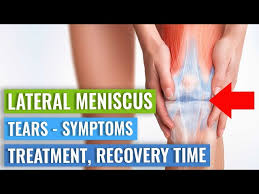
Pain on the outside of the knee is something I see frequently at my Toronto clinic—especially in professionals who sit long hours, runners training along the Don Valley Trail, or active adults who feel their knee pain “should be better by now.”
Many of these patients have already done the right things. They’ve completed physiotherapy, built strength, improved flexibility, and followed exercise programs diligently. Yet the lateral knee pain persists.
When that happens, the issue is often not a lack of strength—but a lack of neuromuscular activation and coordination during real-life movement. This is where many treatment approaches stop short, and where Corrective Chiropractic begins to look deeper.
⸻
What Is the Lateral Meniscus?
The knee contains two menisci—fibrocartilage structures that act as shock absorbers between the femur (thigh bone) and tibia (shin bone). The lateral meniscus, located on the outside of the knee, plays a critical role in:
• Load distribution
• Rotational stability
• Absorbing forces during twisting, pivoting, and downhill motion
Because it is more mobile than the medial meniscus, it is especially sensitive to rotational and shear forces. Research summarized in PubMed highlights that the lateral meniscus bears a substantial portion of load during dynamic knee motion, particularly when rotation is involved (PubMed).
This makes it vulnerable not only to trauma—but to poor movement coordination over time.
⸻
Common Symptoms of Lateral Meniscus Stress
Patients often report:
• Pain on the outer side of the knee
• Sharp discomfort with twisting or pivoting
• Swelling or stiffness after activity
• Clicking or catching sensations
• Pain walking downhill or downstairs
Importantly, many people experience these symptoms without a specific injury. The Government of Canada notes that musculoskeletal pain often develops from cumulative stress rather than a single event (Government of Canada – Musculoskeletal Health).
⸻
Why Strength Alone Is Often Not the Missing Piece
Physiotherapy plays a valuable role in recovery, and I regularly encourage patients to stay active and strong. Most rehab programs do an excellent job at:
• Strengthening quadriceps and hamstrings
• Improving hip stability
• Increasing range of motion
However, one key element is often under-addressed: how well that strength is accessed and coordinated during movement.
You can have strong muscles that simply aren’t being recruited properly when you walk, run, pivot, or change direction. When this happens, the knee—especially the lateral compartment—absorbs forces it was never designed to handle alone.
⸻
Neuromuscular Activation: The Missing Link
Neuromuscular activation refers to how efficiently the nervous system communicates with muscles at the right time and in the right sequence.
If this timing is off:
• The body compensates
• Load shifts away from powerful muscles
• Stress concentrates at passive structures like the meniscus
This is why some patients feel strong in the clinic but unstable or painful during real-world movement.
The Canadian Chiropractic Association emphasizes that the spine plays a central role in nervous system communication, influencing coordination, balance, and movement efficiency (Canadian Chiropractic Association).
⸻
What Is Often Missed: The Rest of the Kinetic Chain
The knee does not function in isolation. It is part of a kinetic chain that includes:
• Feet and ankles
• Knees
• Hips and pelvis
• Lumbar spine
• Thoracic spine
When we “look up the chain,” we often find spinal or pelvic dysfunction that alters how forces travel through the body.
At Dr. Mateusz Krekora Chiropractic Clinic, patients with lateral meniscus pain frequently present with:
• Pelvic imbalance
• Asymmetrical weight bearing
• Lumbar spine restriction
• Postural distortion and inactivated gluteal muscles from prolonged sitting
These findings are commonly missed in knee-focused rehab but play a major role in neuromuscular control.
The Ontario Chiropractic Association notes that chiropractors are trained to assess joint mechanics and movement patterns throughout the body, not just at the site of pain (Ontario Chiropractic Association).
⸻
How Spinal Dysfunction Affects Knee Control
The spine houses and protects the nervous system. When spinal segments are restricted or misaligned:
• Nerve signaling can become inefficient
• Muscle activation timing can be delayed or inhibited
• Coordination between hips, core, and legs becomes compromised
Even subtle spinal dysfunction can shift movement strategies. Instead of power being generated from the hips and core, it is redirected into the knee—often the lateral compartment.
This explains why patients may continue to overload the lateral meniscus despite strong legs.
⸻
The NeuroStructural Corrective Approach
Corrective Chiropractic takes a global view of movement and control.
Step 1: Structural and Neurological Assessment
We assess:
• Spinal alignment and mobility
• Pelvic balance and hip function
• Muscle activation testing
• Postural patterns
This helps identify why neuromuscular activation is altered.
Step 2: Corrective Chiropractic Adjustments
Precise adjustments aim to:
• Restore spinal motion
• Improve nervous system communication
• Enhance coordination between the spine, hips, and legs
Rather than chasing knee symptoms, we address the upstream drivers of poor movement control.
Step 3: Supporting Functional Movement
As spinal function improves, patients often notice:
• Better balance
• Smoother gait
• Less knee strain during daily activities
This complements—not replaces—strength work, allowing existing strength to be used effectively.
⸻
Why This Matters for Long-Term Knee Health
The lateral meniscus is designed to handle load—but only when the body moves efficiently. When neuromuscular control is compromised, even strong knees can become overloaded.
By restoring proper activation patterns and kinetic chain balance, Corrective Chiropractic helps create an environment where the knee no longer has to compensate.
This aligns with the broader understanding in musculoskeletal care that optimal function depends on both strength and neural coordination, not one alone.
⸻
Local Toronto Tips to Reduce Lateral Knee Stress
• Break up long sitting hours: Downtown desk work often leads to spinal stiffness
• Watch asymmetrical habits: Always carrying a bag on one side or standing on one leg
• Pay attention to posture: Slouched sitting can influence spinal and pelvic mechanics
• Address issues early: Persistent knee pain is often a sign of a bigger movement issue
⸻
Conclusion: Treat the System, Not Just the Knee
Lateral meniscus pain is rarely just a knee issue—and it’s rarely just a strength issue.
At Dr. Mateusz Krekora Chiropractic Clinic, I focus on identifying how spinal dysfunction and neuromuscular activation patterns contribute to knee overload. When the nervous system and kinetic chain work together properly, the knee is no longer forced to absorb stress it was never meant to handle alone.
Ready to move with confidence again?
👉 Book Your Free Case Review and discover what may be missing in your recovery.
⸻
This article is for informational purposes only and should not be taken as medical advice. Please consult a licensed chiropractor before starting any treatment.

.png)
