October 19, 2026
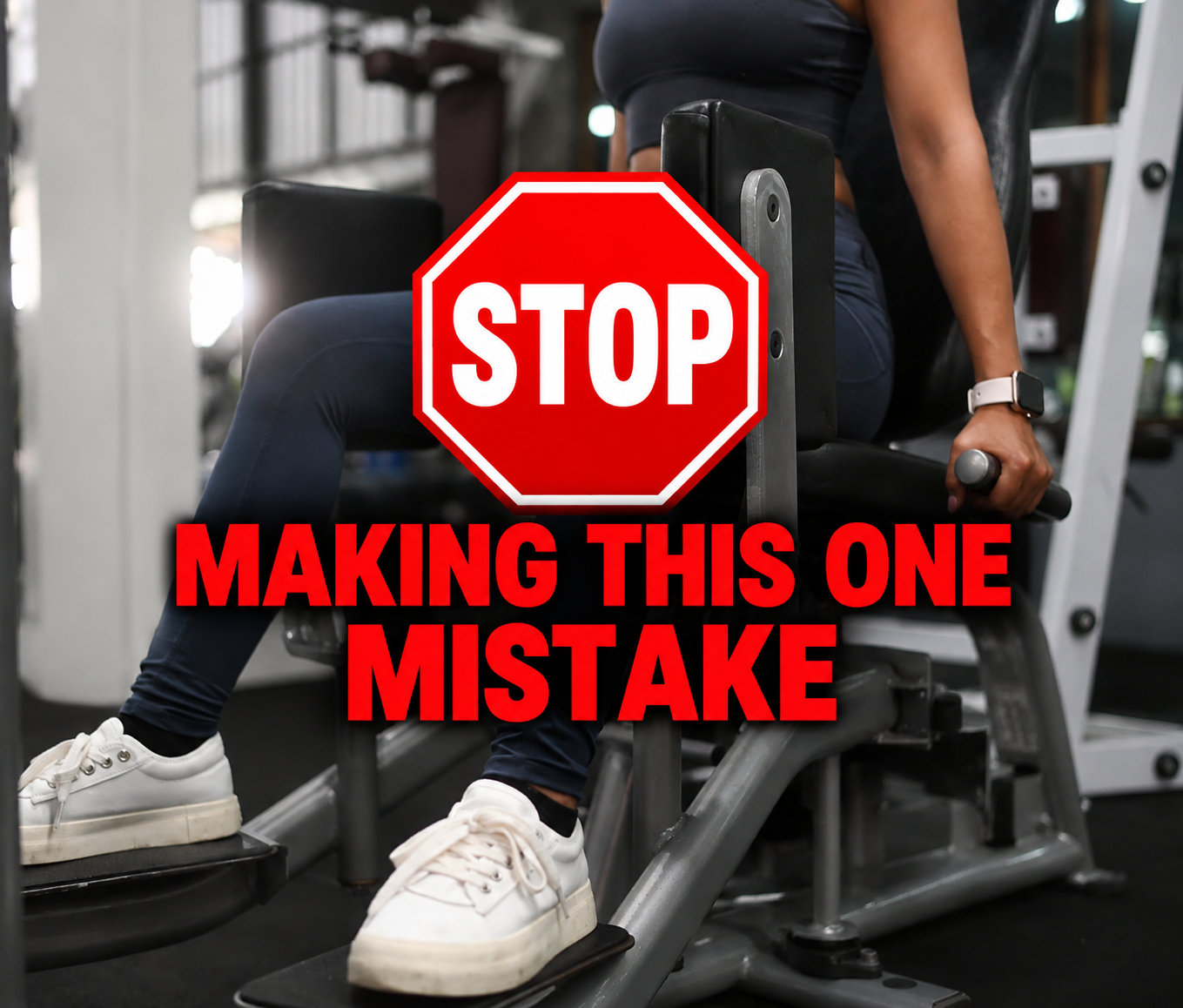
As a Toronto chiropractor who works with many active individuals, I often hear the same frustrating story:
“I work out regularly. I’m in good shape. So why did I get injured?”
When I ask what their workouts look like, I sometimes discover that their entire strength program consists of machines.
Now, let me be clear: I am not against gym machines. Machines can be excellent tools for building muscle, training around certain limitations, controlling a movement, and adding targeted volume to a workout.
The problem is when machines are all you do.
If your goal is to become stronger, move better and prepare your body for an active lifestyle, your training should challenge your body in more than one position or movement pattern.
That means incorporating exercises with dumbbells, barbells and other free weights alongside your machine work.
Research comparing free weights and machines does not show that one is universally superior for building muscle. In fact, both can produce significant improvements in strength and hypertrophy. However, research also suggests that strength adaptations are partly specific to the equipment and movements you train. In other words, if you want to be strong in a variety of real-world movements, it makes sense to train a variety of movements. PubMed systematic review and meta-analysis on free weights vs. machines
The Problem With Only Using Gym Machines
One of the biggest limitations of relying exclusively on machines is that they can provide a very controlled movement path.
That can be useful.
But your body doesn’t live on a fixed track.
When you play basketball, hockey, tennis or soccer, you aren’t sitting down with your back supported while your limbs move along a predetermined path.
You’re accelerating.
You’re decelerating.
You’re rotating.
You’re changing direction.
You’re reaching.
You’re pushing.
You’re pulling.
You’re balancing.
You’re reacting.
Your muscles and joints have to coordinate together to keep you stable while producing force.
This is where free-weight exercises can add something valuable to your training.
A dumbbell row, for example, doesn’t simply ask your back muscles to pull weight. Depending on how you perform it, your body also has to control your trunk and shoulder while maintaining position.
A dumbbell lunge requires your legs to produce force while your body controls balance and alignment.
A barbell squat challenges you to coordinate your hips, knees, ankles and trunk while moving through space.
A farmer’s carry requires you to walk while controlling an external load.
These exercises aren’t necessarily “better” than machines. They simply challenge your body differently.
Research from Canadian exercise scientists has also found that ground-based free-weight exercises can generate substantial core and muscle activation while training strength. Canadian Society for Exercise Physiology position stand on resistance training and core stability
Functional Strength Is Different From Simply Being Strong
Here’s an important distinction:
Being strong in one exercise doesn’t automatically mean you’re prepared for every movement.
You can have an impressive leg press and still struggle with single-leg stability.
You can have a strong chest press and still lack the control required to push yourself off the ground.
You can have enormous biceps and still not be prepared for the demands of throwing a ball, swinging a racquet or absorbing contact.
This is especially important for people who participate in sports.
Think about what happens when you’re playing hockey on a Sunday morning in Toronto, running along the Don Valley Trail, playing basketball at your local gym or competing in a recreational soccer league.
The demands on your body are constantly changing.
Your strength needs to transfer from the gym into movement.
That’s why I like the concept of functional strength.
Functional strength isn’t simply about how much weight you can move. It’s about developing the ability to produce and control force while your body moves through different positions.
And that’s where free weights can become extremely useful.
Why I Love Dumbbells for Unilateral Training
One of my favourite tools for developing functional strength is the dumbbell.
Why?
Because dumbbells allow you to train one side of the body at a time.
This is called unilateral training.
Think about exercises such as:
When you train both sides simultaneously, your stronger side can sometimes compensate for your weaker side.
Unilateral exercises can make those differences much more obvious.
For example, you might discover that your right leg feels completely stable during a split squat while your left leg wobbles.
Or perhaps you can control a dumbbell press smoothly with your right arm but struggle to maintain the same position with your left.
That information is valuable.
It gives you an opportunity to address strength, coordination or mobility differences rather than simply hiding them.
This doesn’t mean every asymmetry is a problem or that everyone needs perfectly symmetrical strength. It simply means that unilateral exercises give you another way to assess and challenge how your body moves.
The Larry Wheels Example: Strength Doesn’t Automatically Equal Movement Skill
A fascinating recent example comes from strength athlete Larry Wheels.
Wheels is famous for his extraordinary strength and bodybuilding achievements. Yet during a 2026 celebrity boxing match against Vitaly Zdorovetskiy, he suffered a serious biceps injury during the bout.
The lesson isn’t that bodybuilding or weightlifting caused his injury.
Nor does one person’s injury prove that machines or free weights prevent injuries.
The more interesting lesson is about specificity.
Being exceptionally strong at lifting weights doesn’t automatically mean that your body is conditioned for every athletic movement.
Boxing involves completely different demands: rapid acceleration and deceleration, rotation through the trunk, footwork, coordination, timing and repeatedly producing force through unfamiliar movement patterns.
Wheels’ injury is a useful reminder that general strength and sport-specific movement capacity are not the same thing.
Your body adapts to the demands you repeatedly expose it to.
That’s why someone who spends years developing impressive gym strength may still need to gradually condition themselves for a new sport.
More Benefits of Free-Weight Training
Adding dumbbells and barbells to your workouts can provide several other benefits.
1. More Movement Variety
Machines can make it easy to repeat the same movement pattern over and over.
Free weights give you hundreds of ways to change your stance, grip, position and movement.
That variety can help you develop a broader range of movement skills.
2. Greater Demand for Body Control
Because free weights aren’t attached to a machine, you have to control the load yourself.
That means your body has to coordinate the movement rather than simply follow the path provided by the equipment.
This is particularly relevant when developing strength that you want to transfer into recreational activities and sports.
3. Better Training for Unilateral Strength
As mentioned earlier, dumbbells are excellent for identifying and training differences between your left and right sides.
Single-leg and single-arm exercises can also challenge your ability to maintain control while producing force.
4. Strength That Transfers to Different Movements
Research comparing free-weight and machine training suggests that strength adaptations are influenced by the specific movements used during training. Free-weight training tends to produce greater improvements when strength is subsequently tested using free-weight exercises, while machine training produces strong improvements on machine-based tests. PubMed research on specificity of free-weight and machine training
That makes intuitive sense.
If you want to become better at controlling your body while moving an external load, you should practice doing exactly that.
So Should You Stop Using Machines?
Absolutely not.
This is not an “machines versus free weights” argument.
It’s a balance argument.
Machines have a valuable place in a well-designed training program.
They can allow you to safely and conveniently train specific muscles, accumulate volume and challenge a muscle without requiring as much coordination from the rest of your body.
Free weights simply provide a different stimulus.
At my Toronto clinic, I often tell active individuals that their gym program should complement the activities they actually enjoy doing.
If you play hockey, your training should eventually prepare you for more than sitting in a machine and pushing weight.
If you play tennis, your body needs more than isolated muscle strength.
If you cycle through Toronto, hike, ski, golf or play recreational basketball, you want your strength training to support the movements those activities demand.
The goal isn’t to eliminate machines.
The goal is to build a body that knows how to move.
A Better Approach to Your Gym Program
For many people, a balanced program could include both machine and free-weight exercises.
For example, instead of doing an entire leg workout exclusively on machines, you might combine:
Free-weight movements:
Machine movements:
Similarly, an upper-body workout could combine barbell or dumbbell presses and rows with machine-based exercises for additional volume.
The exact exercises, loads and progression should depend on your experience, goals, current abilities and any existing limitations.
And remember: free weights aren’t automatically safer than machines.
Poor technique, excessive loads, inadequate recovery and progressing too quickly can create problems with any form of exercise.
The evidence simply doesn’t support the idea that one modality is universally superior. Both machines and free weights can effectively build strength and muscle. PubMed randomized trial comparing free weights and machines
Conclusion: Train Your Muscles — But Don’t Forget to Train Movement
If there’s one gym tip I would give active Torontonians, it’s this:
Don’t let machines become the entire workout.
Machines are useful. Keep them.
But give your body opportunities to stabilize, balance, coordinate and produce force through different movements.
Use dumbbells.
Use barbells.
Train one side at a time.
Challenge your core.
Move through different positions.
And most importantly, gradually expose your body to the movements you actually want to perform outside the gym.
Because the goal of strength training shouldn’t just be to look strong or move a heavy weight in one controlled environment.
You want strength that you can use.
At Dr. Mateusz Krekora Chiropractic Clinic, our approach is focused on helping active individuals understand how their spine, posture, mobility and movement patterns can support the things they love doing.
Whether you’re lifting weights at a Downtown Toronto gym, cycling the Don Valley Trail, playing hockey or simply trying to stay strong as you get older, your body was designed to move.
Train it that way.
Feel strong. Live to the fullest.
Ready to see how your movement and strength could be improved? Book Your Free 20-Minute Case Review and start feeling 25 again.
This article is for informational purposes only and should not be taken as medical advice. Please consult a licensed chiropractor before starting any treatment.


