June 26, 2026
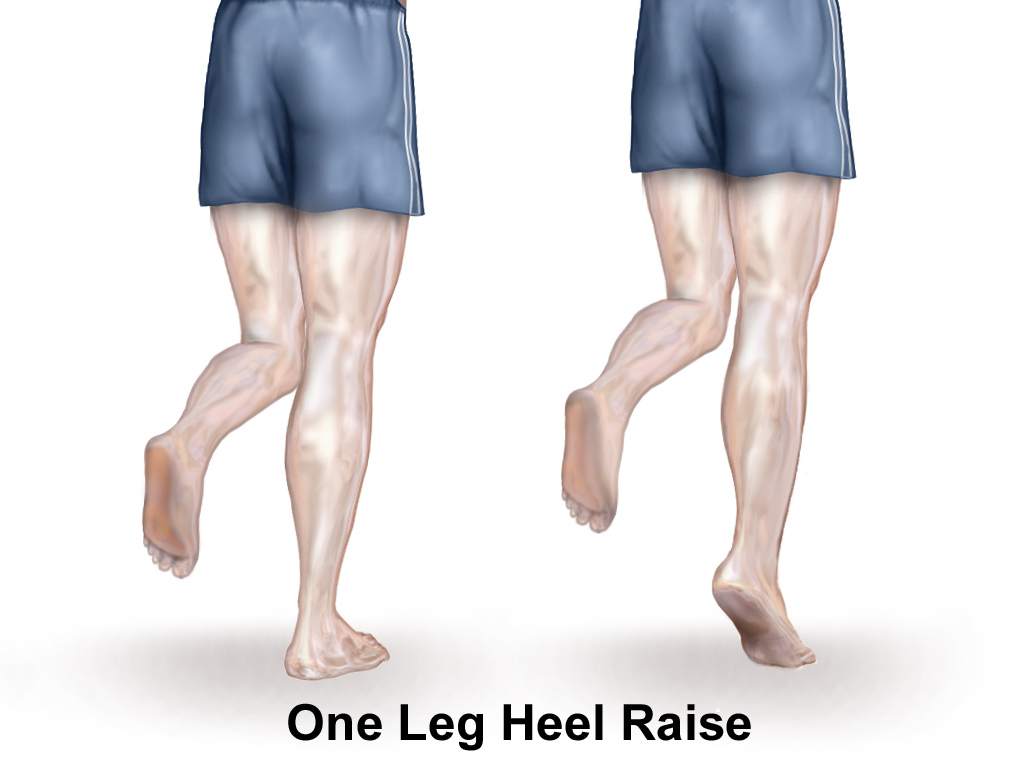
If you’ve ever dealt with Achilles pain, calf tightness, or recurring running injuries, there’s one surprisingly simple test that clinicians often use to evaluate lower leg strength and function: the single-leg heel raise test.
At my Toronto chiropractic clinic, I regularly use this test to help determine how well the calf-Achilles complex is tolerating load — especially for runners returning to activity after Achilles tendinopathy, calf strains, ankle injuries, or persistent stiffness.
The benchmark many rehabilitation professionals look for is the ability to perform 25–30 controlled single-leg heel raises through full range of motion without significant pain, compensation, or excessive fatigue.
It sounds simple. But if you can’t do it, your body may not yet be ready for higher-impact activities like running, jumping, or court sports.
Why the Calf and Achilles Matter So Much
Your calf muscles and Achilles tendon act like a powerful spring system.
Every step you take — whether walking through Union Station, climbing stairs at a TTC stop, or running along the Don Valley Trail — requires the Achilles tendon to absorb and release force efficiently.
Research shows that the Achilles tendon experiences very high loads during running and jumping activities, which is why adequate calf strength and tendon capacity are essential for injury prevention and performance (PubMed Central).
When the calf-Achilles complex becomes weak or overloaded, your body often compensates in ways that can contribute to:
This is why strength testing matters so much during rehabilitation.
What Is the Single-Leg Heel Raise Test?
The test is straightforward:
Clinicians are not just counting repetitions. We’re assessing:
A strong result is generally considered:
In many rehab settings, difficulty completing this test suggests the calf-Achilles complex may not yet tolerate the demands of running or sport safely.
Why 25–30 Heel Raises Is an Important Benchmark
The calf muscles are endurance-based power generators.
Running is not just about cardiovascular fitness — it’s about repeatedly absorbing and producing force through the lower leg thousands of times.
The single-leg heel raise test helps clinicians estimate whether the tendon and calf musculature can tolerate repetitive loading.
Research on Achilles rehabilitation consistently emphasizes restoring calf strength, endurance, and load tolerance before full return to sport (PMC).
Studies also show that heel-rise performance is associated with long-term ankle biomechanics and recovery outcomes after Achilles injuries (PubMed).
In practical terms, if your calf fatigues after 8–10 reps, your body may compensate elsewhere during running, increasing stress on surrounding tissues.
This often explains why some people:
Common Compensation Patterns We See
At Dr. Mateusz Krekora Chiropractic Clinic, I often see patients who unknowingly compensate during heel raises by:
These compensations matter because they often indicate unresolved weakness, reduced tendon capacity, or poor neuromuscular control.
In many cases, the issue isn’t simply “tight calves.” It’s a combination of:
This is where a more comprehensive corrective approach becomes important.
What If You Can’t Reach 25–30 Reps?
First: don’t panic.
Failing this test does not mean something is seriously damaged.
It usually means your calf-Achilles system needs progressive strengthening before returning to higher-load activities safely.
One of the biggest mistakes people make is returning to running too quickly because daily activities feel manageable.
Unfortunately, walking tolerance does not automatically equal running readiness.
Here’s what to focus on instead:
1. Reduce Irritation Without Completely Resting
Complete inactivity can reduce tendon capacity further.
Current evidence supports gradual progressive loading rather than prolonged immobilization for most Achilles issues (PMC).
This may include:
2. Start Progressive Calf Strengthening
A staged strengthening program is often most effective.
This usually progresses from:
Many rehab protocols gradually increase load and range of motion as symptoms improve (Newcastle Hospitals NHS Foundation Trust).
3. Improve Full Range of Motion
A quality heel raise requires:
Restricted motion elsewhere in the kinetic chain often overloads the Achilles tendon unnecessarily.
4. Address Movement Mechanics
At my Toronto clinic, we evaluate:
Sometimes recurring Achilles issues are driven less by the tendon itself and more by how force is being transferred through the body.
This is where NeuroStructural Corrective Care can help identify the root cause rather than simply chasing symptoms.
When Is It Safe to Return to Running?
There’s no perfect universal timeline.
However, clinicians often use functional benchmarks — not just pain levels — to guide return-to-running decisions.
Generally, before returning to running, you should be able to:
Research suggests structured return-to-sport progression is important because returning too quickly may increase the risk of recurrence (PMC).
In other words:
Feeling better is not always the same as being fully prepared.
Local Tips for Toronto Runners and Active Adults
Living in Toronto creates unique stressors for the calf-Achilles complex.
I commonly see flare-ups related to:
A few simple strategies can help:
And most importantly: don’t ignore early stiffness or recurring soreness.
Achilles issues are often easier to resolve early before they become chronic.
Conclusion
The ability to perform 25–30 controlled single-leg heel raises is one of the simplest and most useful indicators of calf and Achilles function.
It helps clinicians assess:
If you struggle with this test, it doesn’t mean you should stop moving completely — but it may mean your body needs a more structured strengthening and corrective plan before returning to high-impact activity safely.
At Dr. Mateusz Krekora Chiropractic Clinic in Toronto, we focus on identifying the underlying mechanical and neurological contributors to recurring Achilles and lower extremity issues using our NeuroStructural Corrective Process.
If your calf or Achilles continues to feel weak, tight, painful, or unreliable, the solution may involve more than stretching alone.
Book Your Free Case Review today and start feeling 25 again.
This article is for informational purposes only and should not be taken as medical advice. Please consult a licensed chiropractor before starting any treatment.

.png)
