February 3, 2026
Introduction
If you’re a runner in Toronto—logging kilometres along the Martin Goodman Trail, Don Valley paths, or squeezing runs in before or after long Bay Street workdays—there’s a good chance you’ve dealt with shin splints at some point.
At my Downtown Toronto Chiropractic clinic, I regularly see runners frustrated because their shin pain keeps returning, even after weeks of rest, icing, and strengthening exercises.
While those strategies aren’t wrong, they’re incomplete.
The truth is: most runners are missing the real driver of recurring shin splints—how they run and what they run in.
Let’s break down what shin splints really are, why conventional advice often falls short, and what actually leads to long-term relief.
The Problem: Why Shin Splints Keep Coming Back
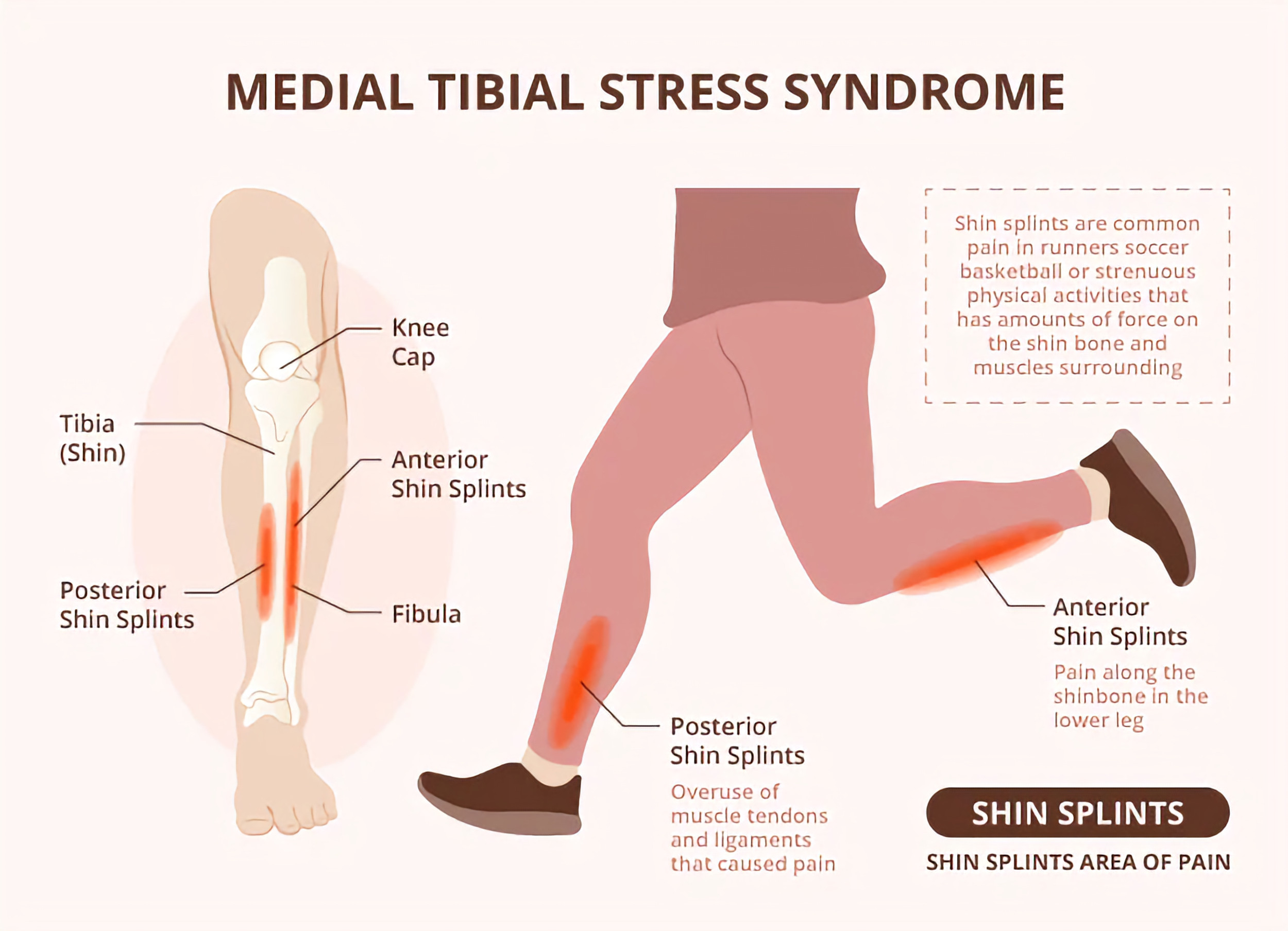
Shin splints—clinically referred to as Medial Tibial Stress Syndrome (MTSS)—are characterized by pain along the inner or front edge of the shin bone (tibia). According to sports medicine literature, they’re one of the most common overuse injuries in runners, especially those increasing mileage or intensity too quickly (PubMed).
What Runners Are Commonly Told
Most runners hear some variation of:
This advice aligns with general conservative care recommendations supported by organizations like the Canadian Chiropractic Association and Ontario Chiropractic Association.
And to be clear—this is a good start.
But here’s the issue:
👉 It treats local symptoms, not the repetitive mechanical stress causing the injury.
Expert Insight: Dr. Mateusz’s Perspective
At Dr. Mateusz Krekora Chiropractic Clinic, I often see runners who have strong shins, good mobility, and have followed rehab exercises perfectly—yet their shin splints return the moment they resume training.
Why?
Because their running mechanics are overloading the tibia with every step.
Shin splints aren’t just a muscle problem. They’re a load management problem involving:
Unless these are addressed, strengthening alone becomes a temporary fix.
What Most Runners Are Missing: Running Form
1. Overstriding: The Silent Shin Killer
Overstriding occurs when your foot lands too far in front of your centre of mass. This increases:
Research published in the Journal of Orthopaedic & Sports Physical Therapy demonstrated that overstriding significantly increases tibial stress, which is directly linked to shin splints and stress fractures (PubMed).
This is especially common in:
2. Cadence: A Simple Change with Big Impact
One of the most effective, evidence-backed interventions for shin splints is increasing cadence—the number of steps you take per minute.
A landmark study by Heiderscheit et al. found that increasing cadence by just 5–10% significantly reduced stress at the hip, knee, and tibia (PubMed).
Why Higher Cadence Helps:
In simple terms:
➡️ More steps, less stress per step
For many recreational runners, moving from ~155–160 steps/min to ~165–175 can be transformative.
Shoes: The Other Missing Piece
3. Shoe Rotation and Cushioning Matter More Than You Think
Another major contributor to persistent shin splints is running in worn-out or inappropriate shoes.
Most running shoes lose their shock-absorbing capacity long before they look worn out. Sports medicine guidelines commonly recommend replacing running shoes every 500–800 kilometres, depending on body weight, running surface, and shoe type.
While research on exact mileage varies, injury risk clearly increases when cushioning and structural support degrade (PubMed).
Common Shoe Mistakes I See in Toronto Runners:
Smarter Shoe Strategy:
How NeuroStructural Chiropractic Care Solves the Root Cause
At Dr. Mateusz Krekora Chiropractic Clinic, we take a NeuroStructural Corrective Care approach—meaning we focus on why stress is accumulating in the shins in the first place.
Our Process Looks At:
Poor spinal or pelvic alignment can alter leg mechanics and increase compensatory stress at the shin—something supported by neuromusculoskeletal research and recognized by the Ontario Chiropractic Association.
When structure improves, movement efficiency improves, reducing repetitive strain without forcing runners to “push through” pain.
Local Tips for Toronto Runners
Conclusion
If you’ve tried rest, ice, and strengthening—but your shin splints keep returning—the missing link is likely how you run and how your body distributes stress.
Long-term relief comes from:
At Dr. Mateusz Krekora Chiropractic Clinic, we help runners move better, load smarter, and stay pain-free—so they can keep doing what they love.
👉 Book Your Free 20-Minute Case Review today and start feeling strong, efficient, and injury-resilient again.
This article is for informational purposes only and should not be taken as medical advice. Please consult a licensed chiropractor before starting any treatment.

.png)
