September 21, 2026
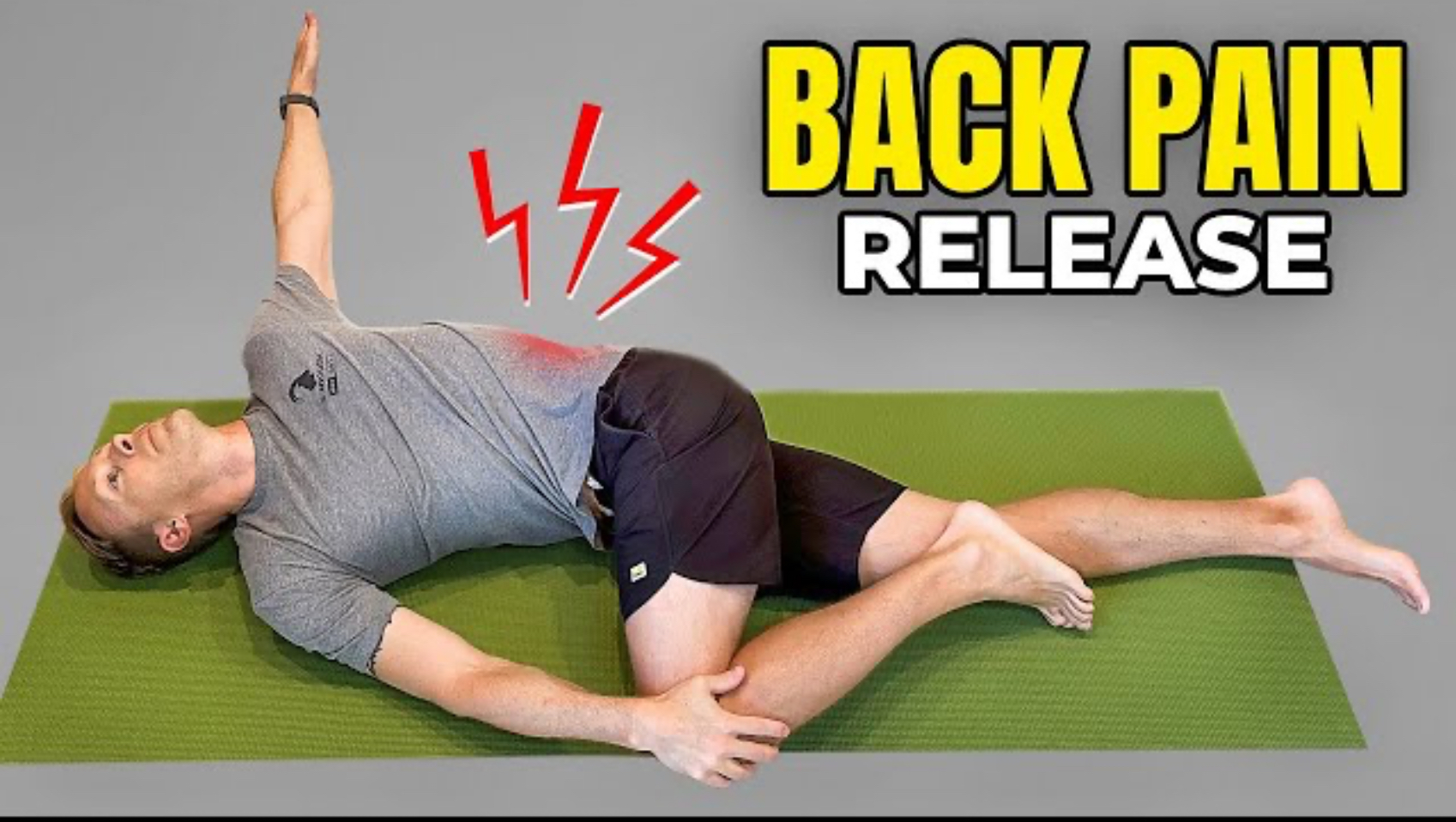
If you have low back pain, you may have discovered that twisting your body a certain way can produce a satisfying “crack.”
For a few seconds, your back may feel looser. You might feel like something has “released,” and naturally, you may do it again the next time your low back feels tight.
But there is an important distinction I explain to many patients in my Toronto clinic:
Cracking your own low back is not necessarily the same thing as receiving a chiropractic adjustment.
At Dr. Mateusz Krekora Chiropractic Clinic, I often see patients who have been self-cracking or self-releasing their low back every day—sometimes for months or even years—yet they still experience stiffness, restricted movement or recurring low back pain.
Why?
Because producing a crack does not necessarily mean you have addressed the area that actually needs attention.
A chiropractic assessment looks beyond whether your back can make a popping sound. It considers how different spinal segments are moving, how the surrounding muscles are responding, how your nervous system is functioning and whether there are other factors contributing to your pain.
The Problem: “But Doctor, I Can Make My Back Crack”
One of the most common conversations I have with patients goes something like this:
“I crack my back all the time. It feels like it needs to be cracked.”
The sensation can certainly feel satisfying.
A cracking or popping sound associated with joint manipulation is generally related to changes within the joint, including the rapid formation of a gas-filled cavity within synovial fluid. The sound itself, however, does not tell us whether a particular spinal segment needed to move. The Canadian Chiropractic Association discusses this distinction when addressing common misconceptions about chiropractic adjustments. Canadian Chiropractic Association: Common Chiropractic Myths (Chiropractic Canada)
This is where I believe many people misunderstand what a chiropractic adjustment is designed to accomplish.
The goal isn’t simply to make your back crack.
The goal is to identify areas of altered movement and determine whether a specific intervention is appropriate for you.
You May Be Moving the Area That Already Moves Well
Imagine your lumbar spine as a series of connected segments.
If one portion of your lower back is relatively mobile while another portion is comparatively restricted, your body does not necessarily distribute movement evenly across those segments.
When you repeatedly twist yourself into a position that produces a crack, you may simply be moving the part of your spine that already moves easily.
That can create a temporary feeling of relief without addressing the underlying movement pattern.
This is one reason I see patients who tell me:
“I crack my back every day, but my back still hurts.”
The cracking itself isn’t necessarily the problem. The question is whether the movement you are creating is actually appropriate for your individual spine.
A chiropractor’s role is to assess the spine, muscles, joints and related nervous system and develop care based on those findings. In Ontario, chiropractors are regulated health professionals specifically trained to assess and manage musculoskeletal conditions. Ontario Chiropractic Association: What Is Chiropractic Care? (OCA)
What Makes a Chiropractic Adjustment Different?
A chiropractic adjustment is not simply “someone else cracking your back.”
The difference begins before the adjustment happens.
A chiropractor evaluates your movement and determines what treatment, if any, is appropriate.
This may involve looking at:
That assessment matters.
The Ontario Chiropractic Association notes that chiropractic education includes extensive training in musculoskeletal assessment, diagnosis, spinal manipulation, biomechanics and clinical care. Chiropractors in Canada complete at least seven years of post-secondary education, including a four-year chiropractic degree, with more than 4,200 hours of specialized chiropractic training. Ontario Chiropractic Association: Chiropractic Education & Regulation (OCA)
So when you visit a Toronto chiropractor, the objective shouldn’t simply be to make your spine pop.
It should be to determine what your body needs and why.
The Neurology Behind a Chiropractic Adjustment
This is one of the most interesting aspects of spinal manipulation.
Your spine is not just a stack of bones. It is surrounded by muscles, connective tissues and an extensive network of sensory nerves that continuously provide information to your nervous system.
When a spinal manipulation is performed, the mechanical stimulus can produce a measurable neuromuscular response.
Research using electromyography (EMG) has demonstrated changes in muscle activity following spinal manipulation. One study found that lumbar manipulation produced neuromuscular responses in participants with and without low back pain. PubMed: The Neuromuscular Response to Spinal Manipulation (PubMed)
Other research has found that spinal manipulation can produce immediate changes in resting activity of some tight lumbar paraspinal muscles. PubMed: Spinal Manipulation Alters Electromyographic Activity of Paraspinal Muscles (PubMed)
This is important because one component of low back pain can be protective muscle guarding.
When your nervous system perceives an area as threatening or painful, surrounding muscles can become more protective and tense. Sometimes the goal of treatment is not to simply “stretch out” those muscles, but to influence the sensory and motor system so the body can move more comfortably.
Research has also demonstrated that lumbar manipulation can temporarily influence neuromuscular responses involved in lumbar stabilization. PubMed: Modulation of the Flexion-Relaxation Response by Spinal Manipulative Therapy (PubMed)
What About the Glutes?
This is particularly relevant when I assess someone with low back pain.
Your gluteal muscles play an important role in hip movement and force production. When someone has pain, stiffness or altered movement strategies, the way they recruit muscles throughout the pelvis and lower body can change.
A chiropractic adjustment may create a neurological stimulus that influences surrounding muscular activity. This is why I often see the adjustment automatically “turns on” my patient‘s glutes.
Why I Don’t Recommend Constantly Self-Cracking Your Low Back
Occasionally moving or stretching your back is not automatically dangerous.
However, repeatedly forcing your spine into rotation, extension or other end-range positions to make it crack is different from performing a controlled mobility exercise.
The biggest issue is that you don’t necessarily know what you’re moving.
You cannot easily determine which spinal segment is moving, which one is restricted, whether the movement is appropriate for your condition or whether there is another underlying reason for your symptoms.
There is also a risk of aggravating muscles, joints or other tissues if you repeatedly use excessive force or an awkward position.
And if self-adjusting causes new or worsening pain, numbness, weakness or other concerning symptoms, it is important to stop and seek an appropriate professional assessment rather than repeatedly trying to “crack it back into place.”
A chiropractor’s training includes understanding contraindications, biomechanics and safe application of spinal manipulation. The Ontario Chiropractic Association’s educational framework includes hundreds of hours specifically devoted to spinal manipulative therapy, including biomechanics and contraindications. OCA Education & Licensure (OCA)
A Chiropractic Adjustment Is Part of a Bigger Process
At my Toronto clinic, I don’t want patients to become dependent on getting their back “cracked.”
I want to understand why they keep feeling the need to crack it in the first place.
That could involve looking at spinal mobility, hip mobility, posture, muscle function, daily habits, work ergonomics and exercise.
For someone spending eight or more hours at a desk on Bay Street, for example, the solution may involve much more than the lumbar spine. For someone cycling regularly on the Don Valley Trail, hip mobility and pelvic mechanics may also be relevant.
This is where corrective care becomes different from simply chasing symptoms.
The evidence for low back pain also supports a broader approach. Canadian clinical guidelines recommend education, self-management and staying active, with spinal manipulation considered as one component of care when appropriate. For persistent low back pain, manipulation may be incorporated into a multimodal approach alongside exercise and other interventions. Canadian Chiropractic Guideline Initiative: Low Back Pain Guideline (PubMed)
The Bottom Line: Don’t Chase the Crack
If you crack your own low back and it feels good, that sensation doesn’t necessarily mean you have done something wrong.
But a crack is not a diagnosis, and a crack is not proof that you have corrected the problem.
You may be repeatedly moving the same mobile part of your lumbar spine while another area remains restricted.
A chiropractic adjustment is different because it is performed within a clinical process: assessment, clinical reasoning, appropriate technique and ongoing reassessment.
And the neurological component matters.
The mechanical stimulus of spinal manipulation can influence sensory input and neuromuscular activity. This may help change muscle guarding and movement responses in some patients, although the effects vary between individuals and should not be oversimplified. (PubMed)
That is why chiropractors don’t simply learn how to “crack backs.”
We spend years learning anatomy, physiology, biomechanics, diagnosis, neurological assessment, spinal manipulation, contraindications and clinical care. In Ontario, becoming a chiropractor involves undergraduate education followed by a four-year professional chiropractic program and the required licensing examinations. Ontario Chiropractic Association: Education & Regulation (OCA)
At Dr. Mateusz Krekora Chiropractic Clinic, my goal is not to make your back crack louder or more often.
My goal is to understand why your back isn’t moving and functioning the way you want it to—and help you build a body that feels strong, moves well and lets you live to the fullest.
Ready to Feel 25 Again?
If you’ve been cracking your low back every day but you’re still dealing with stiffness, discomfort or recurring low back pain, it may be time to stop chasing the crack and start investigating the cause.
Book Your Free Case Review and let’s determine whether NeuroStructural Corrective Care may be appropriate for you.
Feel strong. Live to the fullest.
This article is for informational purposes only and should not be taken as medical advice. Please consult a licensed chiropractor before starting any treatment.

.png)
