September 28, 2026
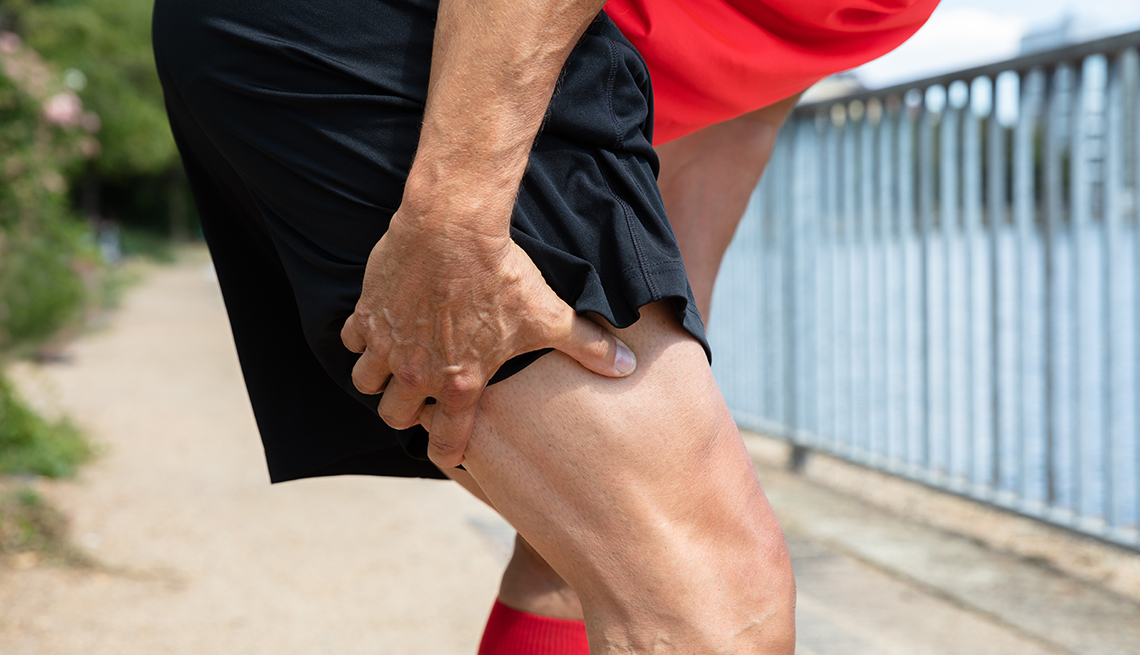
You’ve stretched your calves.
You’ve had them massaged.
You’ve tried foam rolling, strength training, hydration, electrolytes and better nutrition.
Yet somewhere around kilometre 15 of your long run, the familiar sensation starts: your calf tightens, the muscle begins to twitch and suddenly you’re forced to stop.
For many runners, recurring muscle cramps are frustrating precisely because they seem to happen despite doing everything right.
And while hydration, nutrition and training load all deserve consideration, there is another factor that is often overlooked:
neuromuscular tension.
Current research suggests that exercise-associated muscle cramps are complex and multifactorial. One important theory involves neuromuscular fatigue and an imbalance between excitatory and inhibitory signals controlling the muscle.
This raises an interesting question:
If the problem is partly neurological, could a treatment that directly provides neuromodulatory input offer something different from simply stretching or massaging the muscle?
This is one reason I use NeuroFunctional Acupuncture and electroacupuncture with some of my chiropractic patients in Toronto.
Muscle Cramps May Be More Than a “Tight Muscle”
When a muscle cramps, the obvious response is to think:
“That muscle is too tight. I need to stretch it.”
And during an acute cramp, gentle static stretching is indeed one of the established approaches for helping relieve the immediate contraction. Evidence-based reviews continue to recommend gentle stretching until an acute exercise-associated cramp settles.
But there is an important distinction between stopping a cramp that is happening right now and understanding why the muscle keeps cramping during exercise.
Stretching may help the immediate episode without necessarily addressing the factors that caused the muscle to become excessively excitable or fatigued in the first place.
In fact, research examining preventative stretching has found minimal evidence that the frequency or duration of stretching predicts which athletes will develop exercise-associated cramps.
This doesn’t mean stretching is useless.
It means that stretching shouldn’t automatically be assumed to be the answer to recurring cramps.
The same applies to massage.
Massage can be useful for post-exercise soreness and recovery, but evidence for different recovery techniques varies depending on the outcome being measured.
If your recurring cramps are being driven partly by neuromuscular fatigue or altered motor control, it makes sense to consider an intervention that addresses the neuromuscular system, rather than focusing exclusively on the muscle itself.
What Makes Electroacupuncture Different?
Electroacupuncture combines traditional acupuncture needle placement with a small electrical stimulus delivered through selected needles.
That electrical input creates a form of controlled sensory and neuromuscular stimulation.
And this is where electroacupuncture differs conceptually from simply stretching or massaging a muscle.
Stretching primarily changes the mechanical length and sensory input of the muscle-tendon unit.
Massage applies mechanical pressure and movement to soft tissues.
Electroacupuncture introduces an additional layer of electrical neuromodulation.
The objective isn’t simply to “loosen a muscle.”
We’re trying to influence the communication between the nervous system and the tissues involved in movement.
This distinction becomes particularly interesting when we’re dealing with a muscle that repeatedly becomes excessively tense during exercise.
The Neuromuscular Connection
Your muscles don’t decide independently when to contract.
Every contraction is controlled by an incredibly complex system involving your brain, spinal cord, peripheral nerves, sensory receptors and muscles.
During prolonged or intense exercise, fatigue can alter this system.
One established model of exercise-associated cramping proposes that fatigue changes the balance between excitatory input from muscle spindles and inhibitory input from Golgi tendon organs, increasing the likelihood of involuntary muscle contraction.
In simple terms:
The problem may not just be that the muscle is “tight.”
The nervous system may also be influencing how readily that muscle contracts and relaxes.
This is why I find the concept of neuromodulation so interesting clinically.
Instead of only asking:
“How can we stretch this muscle?”
we can also ask:
“How can we influence the neurological input controlling this muscle?”
Why Some Patients Say Their Muscles Finally “Let Go”
One of the most common comments I hear from patients following electroacupuncture is surprisingly simple:
“My muscle finally relaxed.”
I’ve had runners tell me that they had been stretching and massaging the same calf repeatedly, yet it continued to feel chronically tense.
After electroacupuncture, they describe a different sensation—a feeling that the muscle has finally “let go.”
Some patients have also reported to me that after treatment, they were able to complete subsequent runs without experiencing the cramps they had been dealing with.
These are clinical observations from my practice, not proof that electroacupuncture prevents muscle cramps.
That’s an important distinction.
Patient experiences can tell us what may be worth investigating, but they cannot replace controlled clinical research.
What makes these observations interesting is that they are consistent with the broader concept that muscle cramps involve the nervous system, not simply the physical length of the muscle.
Electroacupuncture and Neuromodulation
The potential advantage of electroacupuncture is that it provides a more specific form of sensory stimulation than passive stretching.
Depending on the technique, electrical stimulation can activate sensory and motor nerve pathways.
This may influence how the nervous system processes sensory information and regulates muscular activity.
Research into electrical stimulation and neuromuscular fatigue is still developing, but systematic reviews have investigated electrical stimulation alongside interventions such as massage and stretching as strategies for influencing neuromuscular recovery.
More recently, a randomized controlled trial examining neuromuscular electrical stimulation (NMES) in adults with nocturnal leg cramps reported greater improvements in cramp threshold and pain compared with stretching.
That study should not be interpreted as proof that electroacupuncture is superior to stretching for runners—the treatment methods and patient populations are different.
But it does provide an interesting piece of evidence supporting the broader idea that electrical neuromuscular stimulation may influence cramp susceptibility differently from stretching alone.
Research specifically examining electroacupuncture for exercise-associated muscle cramps remains limited.
So while the mechanism is promising, more research is needed before we can say that electroacupuncture definitively prevents cramps.
Why Electroacupuncture May Be Worth Considering When Stretching Isn’t Enough
Imagine two runners.
Runner A has a calf that occasionally feels tight after a hard workout.
Runner B has the same calf repeatedly cramping at approximately the same point during long runs, despite appropriate nutrition, strength training and recovery.
Both runners might benefit from mobility work.
But Runner B may require a deeper investigation.
If the calf is repeatedly becoming overloaded, we need to understand why.
Is there excessive muscular tension?
Is there altered movement somewhere else in the kinetic chain?
Is the ankle contributing appropriately?
Is the hip functioning efficiently?
Is one side compensating for the other?
Is training load exceeding recovery capacity?
Are there changes in movement strategy as fatigue develops?
Or is there another medical or neurological factor that needs to be investigated?
This is why I don’t approach recurring cramps by simply treating the muscle that hurts.
NeuroStructural Assessment: Find the Reason Behind the Cramp
At Dr. Mateusz Krekora Chiropractic Clinic, I use a NeuroStructural examination to look at the entire movement system.
That can include assessing:
The goal is not to assume that every cramp originates in the spine.
It doesn’t.
Exercise-associated muscle cramps are multifactorial, and current evidence does not support one universal cause or treatment for every athlete.
Instead, the goal is to determine what factors may be relevant in your individual case.
If excessive muscular tension appears to be part of the picture, electroacupuncture may be incorporated into a broader corrective strategy.
Stretching, Massage or Electroacupuncture?
The answer doesn’t have to be one or the other.
Stretching has an established role in managing an acute cramp, while massage may be useful for soreness and recovery.
Electroacupuncture offers something different: an opportunity to introduce targeted neuromuscular stimulation when excessive tension or altered neuromuscular control appears relevant.
Rather than thinking:
“Which treatment is universally better?”
I prefer to ask:
“What does this person’s nervous and musculoskeletal system actually need?”
For some people, that may be mobility work.
For others, it may be strengthening.
For others, recovery and training-load modification may be the most important factor.
And for some athletes, electroacupuncture may be a useful addition when persistent muscular tension appears to be contributing to their symptoms.
Could Electroacupuncture Help Your Running?
If you’re a runner in Toronto who repeatedly develops calf, hamstring or foot cramps despite taking care of your nutrition, hydration, strength and recovery, it may be worth looking beyond the usual explanations.
Your cramps may not simply mean that you need to stretch more.
They may reflect a combination of fatigue, muscular tension and altered neuromuscular control.
Electroacupuncture provides a unique way of introducing neuromodulatory stimulation to the system.
And while research specifically on electroacupuncture for exercise-associated muscle cramps is still developing, the neuromuscular model of cramping provides a reasonable basis for investigating treatments that influence the nervous system.
At my Toronto clinic, I combine this perspective with a full NeuroStructural assessment rather than treating the cramping muscle in isolation.
The objective isn’t just to make your calf feel looser on the treatment table.
It’s to understand why it keeps tightening in the first place.
If you’re tired of having your long runs interrupted by the same recurring cramp, a comprehensive assessment may be the next step.
Feel strong. Live to the fullest.
Book Your Free 20-Minute Case Review and let’s investigate what may be contributing to your recurring muscle cramps.
This article is for informational purposes only and should not be taken as medical advice. Please consult a licensed chiropractor before starting any treatment.


