November 26, 2025
Introduction
Many of my Toronto patients are surprised when I tell them this:
Their persistent low back pain isn’t actually a low-back problem.
It’s coming from their mid-back.
If you work long hours on Bay Street, spend evenings studying at U of T, or cycle along the Don Valley Trail on weekends, your mid-back (the thoracic spine) plays a major role in how your entire spine stabilizes and distributes load. And when that region becomes stiff, weak, or structurally misaligned, the low back often becomes the “victim.”
As a Toronto chiropractor specializing in NeuroStructural Corrective Care, I see this connection every day — and fixing the mid-back often results in low-back relief that finally lasts.
Let’s break down why.
The Problem: Low Back Pain that Won’t Go Away
Low back pain is one of the most common reasons Canadians seek care. According to the Canadian Chiropractic Association, up to 85% of people will experience low back pain at some point in their lives (CCA). While many treatments focus only on the painful area, the science of spine mechanics shows that pain is often referred from adjacent regions.
In other words:
Where it hurts isn’t always where the problem is.
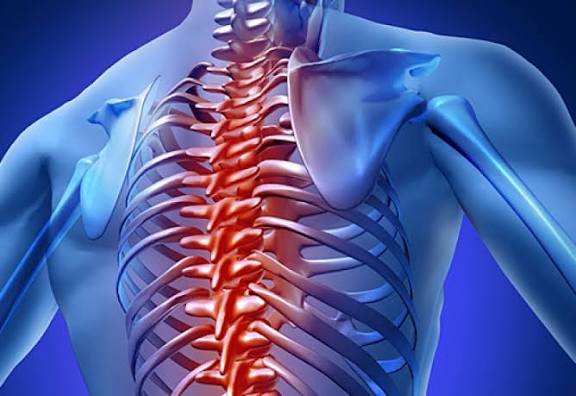
The thoracic spine — your mid-back — influences posture, rib movement, breathing mechanics, shoulder positioning, and core stability. When it becomes dysfunctional, the lumbar spine is forced to compensate.
This compensation leads to:
Over time, this compensation becomes chronic stress on the spine and surrounding muscles— and chronic stress/strain leads to chronic pain.
Expert Insight (Dr. Mateusz’s Perspective)
At Dr. Mateusz Krekora Chiropractic Clinic in downtown Toronto, I often see a predictable pattern:
1. Stiff mid-back → hypermobile low back
When the mid-back locks up from prolonged sitting or poor posture, the low back becomes overly flexible to make up for lost mobility above. This excessive motion irritates joints and soft tissues.
2. Rounded shoulders → altered spinal alignment
A slouched thoracic posture shifts your center of gravity forward. Your low back must arch more dramatically to keep you upright. This results in increased compression and muscular guarding.
3. Rib mechanics influence lumbar mechanics
Restricted rib motion (common in desk workers and students) affects your ability to rotate and extend through the thoracic spine. The lumbar spine then absorbs rotational forces it was not designed to handle.
Research from peer-reviewed journals supports this: thoracic spine dysfunction is strongly associated with altered lumbar biomechanics (PubMed – Thoracic Spine and Low Back Pain).
4. Nervous system connections
The thoracic spine houses key nerve pathways that influence muscle activation patterns throughout the trunk.
If mid-back nerves or joints are irritated, the low-back stabilizers may weaken or misfire.
This is why NeuroFunctional Acupuncture and NeuroStructural adjustments are so effective — they restore not just mobility, but neurological coordination and function.
How NeuroStructural Care Solves the Root Cause
At my Toronto Chiroprctic clinic, we use the NeuroStructural Corrective Process to identify and fix the underlying structural issues contributing to low back pain.
Step 1: Precise Assessment
We evaluate:
Most patients with chronic low back pain show significant thoracic stiffness, even if they never feel pain there!
Step 2: NeuroStructural Chiropractic Adjustments
Thoracic spinal adjustments restore proper mobility and reduce the compensations occurring in the lumbar spine.
The Ontario Chiropractic Association notes that restoring segmental motion can decrease mechanical stress and improve function (OCA).
Step 3: NeuroFunctional Acupuncture
This technique helps reset the neuromuscular system, reduce guarding, and improve activation of deep spinal stabilizers, gluteal and core muscles.
Step 4: Corrective Exercises
We prescribe targeted exercises such as:
These aren’t generic exercises — they’re customized to your structural findings.
Step 5: Long-Term Structural Correction
With ongoing care, we correct the underlying alignment issues so the problem doesn’t return.
This is why so many patients say they finally “feel 25 again.”
Local Toronto Lifestyle Factors That Contribute to Mid-Back Dysfunction
Living in Toronto means your spine faces unique stresses. The most common culprits?
1. Bay Street desk posture
Hours of leaning into a laptop create thoracic flexion, rounded shoulders, and rib stiffness.
2. Streetcar and TTC commuting
Long periods of sitting in forward-flexed positions increase thoracic immobility.
3. Cycling the Don Valley or commuting by bike
Cycling naturally rounds the mid-back, especially without sufficient mobility after.
4. Condo living with long hours at home workstations
Poor ergonomic setups are a major mid-back stressor and more prevalent with hybrid work schedules.
5. School and study posture
For University of Toronto, TMU, and high-school students, prolonged studying means chronic thoracic loading.
Local Tips You Can Start Today
Here are simple habits I teach my Toronto patients to reduce mid-back dysfunction:
1. “Thoracic Opener” Stretch
Use a foam roller along your mid-back for gentle extension.
2. Rib-Cage Breathing
Place your hands around your ribs and practice expanding sideways.
This reduces stiffness and improves spinal mechanics.
3. Desk Breaks Every 30–45 Minutes
Stand, extend the mid-back, and reset your posture.
4. Adjust Your Screen Height
Your eyes should be at the top third of the screen — not halfway down.
5. Avoid Excess Arching in the Low Back
Think: “soft ribs, tall spine.”
These tips help maintain the corrections we make in the clinic and prevent the mid-back from locking down again.
Conclusion
If you’ve been treating your low back pain without long-term improvement, it may be because the real issue is higher up.
The thoracic spine plays a major role in your overall structural health, and addressing it can finally unlock lasting relief.
At Dr. Mateusz Krekora Chiropractic Clinic, I help Toronto patients uncover the root cause of their pain using a comprehensive NeuroStructural Corrective Process that goes far beyond symptom relief.
Ready to feel strong, move freely, and get back to living fully?
Book your free 20-minute case review today:
This article is for informational purposes only and should not be taken as medical advice. Please consult a licensed chiropractor before starting any treatment.

.png)
