August 7, 2026
You’ve Tried Everything… So Why Does Your Heel Still Hurt?
If you’ve been struggling with plantar fasciitis for months—or even years—you’ve probably already been down the familiar road.
New orthotics.
Shockwave therapy.
Stretching.
Rolling your foot on a frozen water bottle.
Hours of physiotherapy.
Temporary improvement… followed by the same pain every morning when you step out of bed.
At my Toronto chiropractic clinic, I regularly meet people who tell me, “I’ve tried everything, but it keeps coming back.”
The truth is that many treatments focus on where the pain is, rather than why the pain developed in the first place.
While the plantar fascia is certainly irritated, the root cause isn’t always located in the foot.
Sometimes the real problem starts much higher up—in your spine, your posture, and the way your body moves as a whole.
What Is Plantar Fasciitis?
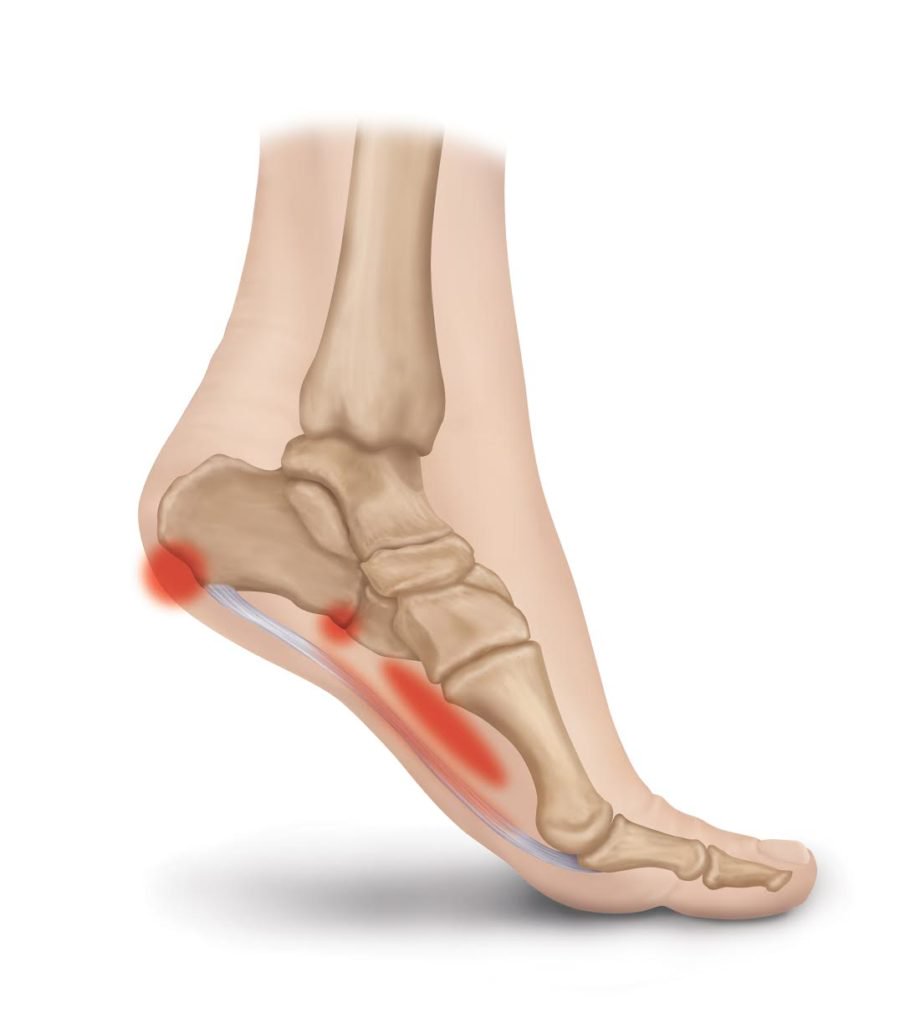
The plantar fascia is a thick band of connective tissue running along the bottom of your foot, connecting your heel to your toes. It helps support your arch and absorbs forces every time you walk.
When excessive stress is placed on this tissue over time, small areas of irritation and degeneration can develop, leading to the classic symptoms:
Research suggests plantar heel pain is one of the most common causes of foot pain in adults and can become persistent when contributing mechanical factors are not addressed. Current clinical guidelines recommend a combination of exercise, education, and load management rather than relying on passive treatments alone (Journal of Orthopaedic & Sports Physical Therapy Clinical Practice Guideline).
But here’s the important question:
Why is your plantar fascia being overloaded in the first place?
The Foot Is Often the Victim—Not the Culprit
Your feet don’t work in isolation.
Every step you take involves coordination between:
If something higher up the kinetic chain isn’t functioning properly, your feet often have to compensate.
Treating only the painful tissue without identifying the underlying cause can sometimes explain why symptoms keep returning.
Your Spine Sends the Signals to Your Feet
Many people are surprised to learn that the muscles controlling the foot don’t originate in the foot.
They receive their instructions from nerves that exit the lower spine.
The spinal nerve roots from approximately L4, L5, S1, and S2 contribute to the nerves that control many of the muscles responsible for ankle stability, foot movement, and balance. These nerve roots ultimately form branches of the sciatic nerve, including the tibial nerve, which supplies much of the sole of the foot.
When the joints of the spine become restricted or irritated, or when poor movement patterns place ongoing stress on the lower back, the communication between the brain and the muscles may become less efficient.
This doesn’t necessarily mean there is a pinched nerve causing severe symptoms.
Instead, subtle changes in movement, muscle coordination, and joint mechanics can gradually alter how forces are distributed through the lower limb.
When muscles don’t activate optimally, the plantar fascia may end up absorbing more stress than it was designed to handle.
Poor Posture Changes How You Load Your Feet
One of the biggest contributors I see in my clinic isn’t actually the foot.
It’s posture.
Think about someone who spends eight to ten hours each day sitting at a desk on Bay Street before commuting home.
Over time they often develop:
These postural adaptations don’t stay confined to the upper body.
They change the way the entire body absorbs force.
If your pelvis shifts forward or rotates asymmetrically, every step places slightly different loads through your knees, ankles, and feet.
Multiply that by several thousand steps every day.
Eventually, the plantar fascia may simply become the tissue that can no longer tolerate the extra stress.
Instead of asking, “Why does my foot hurt?”
A better question is:
“Why is my foot doing more work than it should?”
Weak Glutes Can Overwork Your Feet
Another commonly overlooked contributor is reduced glute function.
Your glute muscles are some of the strongest stabilizers in the body.
During walking and running they help:
When the glutes aren’t activating efficiently, the body has to compensate elsewhere.
Research has demonstrated that altered hip strength and lower extremity mechanics can influence loading throughout the kinetic chain, potentially contributing to overuse injuries.
Instead of absorbing force through the hips, more stress may travel into:
In many chronic plantar fasciitis cases, strengthening the hips and restoring proper movement patterns can be just as important as treating the foot itself.
Why Orthotics and Shockwave Sometimes Don’t Solve the Problem
Orthotics can be helpful.
Shockwave therapy may reduce symptoms for some individuals.
Physiotherapy exercises are often valuable.
The problem isn’t that these treatments are “wrong.”
The problem is that they may not address every contributing factor.
Imagine your car’s tires keep wearing out unevenly.
Replacing the tires helps temporarily.
But if the suspension and wheel alignment aren’t corrected, the new tires wear out exactly the same way.
Your body works similarly.
If poor posture…
Reduced spinal mobility…
Hip weakness…
Or altered movement mechanics continue to overload the plantar fascia…
The symptoms often return once treatment stops.
A Head-to-Toe Assessment Finds the Root Cause
This is where corrective chiropractic care differs from simply treating the painful area.
At Dr. Mateusz Krekora Chiropractic Clinic, we don’t just examine the foot.
We assess how your entire body functions together.
Your examination may include:
Posture Assessment
We evaluate your standing posture to identify shifts that may increase stress on your feet.
Spinal Motion Assessment
Restricted movement in the spine can influence the mechanics of the pelvis and lower limbs.
Pelvic Alignment
Small asymmetries may alter how force is transferred during walking.
Hip Mobility
Reduced hip movement often causes compensations farther down the chain.
Glute Activation
Weak or delayed glute activation frequently contributes to inefficient walking mechanics.
Walking Analysis
Observing how you move can reveal compensation patterns that aren’t obvious while you’re standing still.
Foot Mechanics
Of course, we also examine the foot itself—but as one important piece of the larger picture.
Our goal is to identify why the plantar fascia continues to be overloaded rather than simply managing the symptoms.
Corrective Chiropractic Care Focuses on the Whole System
Corrective chiropractic care aims to improve how your body moves as an integrated system.
Depending on your individual findings, your care plan may include:
Rather than chasing symptoms from one treatment to another, the objective is to improve overall movement quality so the plantar fascia is no longer forced to compensate.
Every patient is different, which is why a thorough assessment is essential before determining the most appropriate course of care.
Don’t Ignore the Rest of the Chain
Persistent plantar fasciitis isn’t always just a foot problem.
Sometimes the foot is simply the area that finally begins to hurt after months or years of compensation occurring elsewhere.
When posture, spinal function, hip stability, and lower limb mechanics all improve together, many people experience more durable improvements than when treatment focuses solely on the painful tissue.
If you’ve already tried orthotics, shockwave therapy, stretching, massage, or physiotherapy without lasting success, it may be time to ask a different question.
Could your foot pain actually be coming from somewhere else?
A comprehensive, head-to-toe assessment can help uncover the contributing factors that may have been missed.
Ready to Find the Root Cause?
If your plantar fasciitis keeps coming back despite multiple treatments, don’t settle for temporary relief.
At Dr. Mateusz Krekora Chiropractic Clinic in downtown Toronto, our NeuroStructural Corrective Care approach evaluates your body from head to toe to identify the underlying movement and postural factors contributing to persistent foot pain. Rather than focusing only on the site of symptoms, we aim to restore better function throughout the entire kinetic chain.
Book your free 20-minute case review today and start feeling 25 again.
This article is for informational purposes only and should not be taken as medical advice. Please consult a licensed chiropractor before starting any treatment.

.png)
