February 23, 2026
You’re walking along Queen Street. Your foot hits an uneven patch of pavement. For a split second, your ankle starts to roll inward.
Sometimes you recover instantly.
Other times—you don’t.
Most people are told their ankle is “weak” or that their ligaments are “loose.” But at my Toronto clinic, I often explain something surprising:
Your ankle instability may not be a strength problem. It may be a nervous system problem.
If your brain and spinal cord cannot communicate efficiently with the muscles that protect your ankle—especially in high-speed, reactive moments—no amount of simple strengthening will fully solve the issue.
At Dr. Mateusz Krekora Chiropractic Clinic, we focus on the NeuroStructural root cause—because lasting stability comes from neurological
integrity, not just muscle size.
The Problem: Why Ankles Feel Weak Even After Rehab
Many Toronto patients complete ankle-specific rehabilitation:
And yet they still say:
“It feels like my ankle might give out.”
That feeling isn’t always about ligament laxity.
Proprioception: Your Body’s Internal GPS
Proprioception is your brain’s awareness of joint position. Ligaments, muscles, and joint capsules send constant sensory input to the spinal cord and brain.
Research in sports medicine shows that reduced proprioception is a major contributor to chronic ankle instability (PubMed – Chronic Ankle Instability and Proprioception).
But here’s the key:
Proprioception is a neurological process.
If the nervous system is not functioning optimally, the signal becomes delayed or distorted.
And milliseconds matter.
Expert Insight: The Nervous System Controls Stability
At my Downtown Toronto clinic, when someone presents with repeated ankle rolling, I don’t just test the ankle.
I assess:
Why?
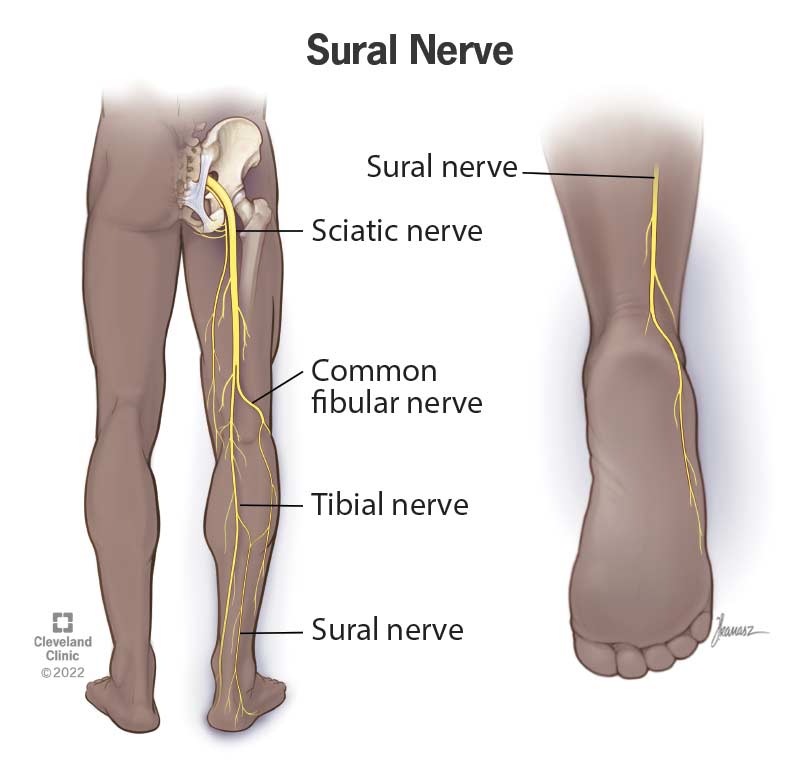
Because the primary stabilizer protecting the lateral ankle ligaments—the fibularis longus—is controlled by the superficial fibular nerve, which originates from the lower lumbar spine (L5-S1).
If spinal dysfunction affects nerve signaling, muscle inhibition can occur.
According to the Canadian Chiropractic Association, chiropractic care focuses on optimizing neuromusculoskeletal health by improving joint and nervous system function.
That neurological optimization is often the missing piece.
How Spinal Dysfunction Reduces Ankle Stability
When a spinal segment loses proper motion or alignment:
This isn’t always painful.
In fact, many people with ankle instability report minimal low back pain.
But subtle dysfunction can alter motor control.
Research published in peer-reviewed literature demonstrates that spinal manipulation can influence neuromuscular function and muscle activation patterns (PubMed – Spinal Manipulation and Neuromuscular Control).
While research is ongoing, current evidence suggests spinal input affects central motor control in measurable ways.
If that control is compromised, reaction speed decreases.
And when your ankle is about to roll, reaction speed is everything.
The Critical Question: Can Your Fibularis Longus Fire in Time?
When your foot unexpectedly inverts:
This happens in fractions of a second.
If nerve conduction or motor recruitment is delayed—even slightly—the ligament absorbs the stress instead of the muscle.
That’s when sprains happen.
Strength alone doesn’t guarantee fast reflexive contraction.
Neurological efficiency does.
How NeuroStructural Corrective Care Makes Changes Stick
1. Correcting the Source of Nerve Interference
Through precise chiropractic adjustments, we restore proper motion to dysfunctional spinal segments.
Restoring spinal motion improves:
This helps the nervous system recalibrate.
2. Addressing Muscle Inhibition Directly
Even when strength appears normal in slow testing, many stabilizing muscles are neurologically inhibited in reactive settings.
That’s where NeuroFunctional Acupuncture plays a role.
By stimulating motor points and peripheral nerves:
The goal is not just contraction—but faster, more reliable contraction.
When paired with spinal correction, this reinforces proper signaling up and down the chain.
3. Integrating Ankle-Specific Rehab (The Right Way)
Ankle exercises absolutely matter.
But they must be layered on top of neurological correction.
We incorporate:
Research supports neuromuscular training for reducing ankle sprain recurrence (PubMed – Neuromuscular Training Reduces Recurrence).
However, when the spine is not addressed, improvements may plateau.
Correct the chain first.
Then reinforce the pattern.
That’s how the changes stick.
Why This Matters for Active Toronto Lifestyles
Whether you’re:
Your ankle doesn’t need to be strong in a controlled environment.
It needs to respond instantly in unpredictable ones.
True stability is:
Not just muscular.
The Bigger Picture: Stability Is a Whole-Chain Process
Your ankle is the end of a neurological highway that begins in your brain and travels through your spinal cord.
If there’s interference along that highway:
At Dr. Mateusz Krekora Chiropractic Clinic, our NeuroStructural approach ensures:
We don’t just help ankles feel stable.
We help them perform when it matters most.
Conclusion: Strong Isn’t Enough — You Need Fast
If you’ve been told your ankle is “weak,” consider a different perspective.
It may not be weak.
It may be neurologically underperforming.
By correcting spinal dysfunction, restoring proprioception, and retraining muscle activation timing, we create lasting stability that shows up in those split-second moments—when your ankle is about to roll and your fibularis longus must respond immediately.
If you’re ready to stop worrying about your ankle giving out and start moving with confidence…
👉 Book Your Free Case Review and let’s help you feel strong, live to the fullest, and start feeling 25 again.
This article is for informational purposes only and should not be taken as medical advice. Please consult a licensed chiropractor before starting any treatment.

.png)
